Does Australia need a Federal Law on Truth in Political Advertising?
Thursday 20 June 2024
Polling conducted after the 2022 election revealed that nine in ten Australians agree that truth in political advertising laws should be in place by the next election. In its Interim Report on the Conduct of the 2022 elections, the Australian Parliament made a formal recommendation that the Government develop legislation governing truth in political advertising. In June 2023, the Albanese Government released an exposure draft of the Communications Legislation Amendment (Combatting Misinformation and Disinformation) Bill 2023 (2023 Bill), which gives the Australian Communications and Media Authority new powers to regulate online platforms for the purpose of combatting information and disinformation. A public consultation took place from July through August 2023, which garnered over 2,000 public submissions and approximately 20,000 comments, with many expressing concerns that the 2023 Bill does not strike the right balance between combatting the harms flowing from disinformation and misinformation and the adequate protection of free speech. While the 2023 Bill does not target truth in political advertising specifically, its scope reaches material covered by these types of laws. Reports suggest that a federal bill specifically targeting truth in political advertising could be introduced as early as this year.
In this discussion, our panellists considered the question of whether Australia needs a truth in political advertising law and, if so, what such a law should look like. They considered, among other issues, lessons from the implementation of South Australia’s truth in political advertising laws, the legal and political concerns that these types of laws raise, criticisms of the 2023 Bill from human rights experts and others, and Ireland’s recent effort to regulate truth in political advertising via its Electoral Reform Act 2022.
This webinar was held as part of the CCCS Global Public Law Series.
Photo by Marcus Reubenstein on Unsplash
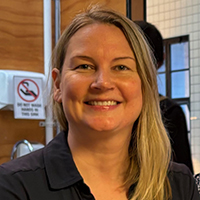
Eliza Bechtold is a Lecturer at the University of Aberdeen. She researches in the area of freedom of expression, with a particular focus on disinformation and the regulation of online speech.Prior to entering academia, Dr Bechtold served as the Legal Director of a state affiliate of the American Civil Liberties Union, a non-partisan, non-profit organisation that works to defend the individual rights and liberties guaranteed by the Constitution and laws of the US. She holds a BA from Scripps College, a JD from the University of California, Hastings College of the Law, an LLM in Public International Law from the London School of Economics and Political Science (LSE), and a PhD from Durham Law School. While at the LSE, she co-founded LSE Pro Bono Matters, a post-graduate led pro bono group based at the LSE Law Department that engages in human rights advocacy.
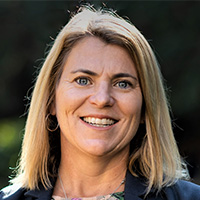
Andrea Carson is currently a visiting research fellow at the University of Oxford working with the Reuters Institute for the Study of Journalism undertaking research on public trust in electoral bodies amid disinformation campaigns during elections.
Her home University and position is as a Professor of Political Communication in the Department of Politics, Media and Philosophy at La Trobe University. She is a trained political scientist and journalist who examines the news media’s role in politics. She researches media trust, political communication, digital campaigning and elections and digital platform regulation. She does comparative work on the regulatory environments of digital platforms and mitigation measures to tackle mis- and disinformation. She holds several ARC grants including a Discovery examining political trust and is the 2023 recipient of La Trobe University’s prestigious Vice Chancellor’s Overall Research Excellence Award.
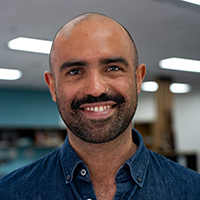
David Mejia-Canales is a Senior Lawyer at the Human Rights Law Centre focusing on defending the rights of refugees and people seeking asylum and on protecting democratic freedoms.Prior to this David was a policy adviser in the Commonwealth Parliament working on legal system reform and on justice issues impacting First Nations people. In addition to his experience with legal policy and law reform, David has worked in community development and health promotion, including HIV prevention and sexual and reproductive health rights with LGBTIQ+ and First Nations communities, as well as research to better meet the needs of LGBTIQ+ refugees and people seeking asylum. David holds a Bachelor of Arts from La Trobe University with majors in anthropology and politics, a Juris Doctor from RMIT University and a Graduate Diploma in Legal Practice from the Australian National University.
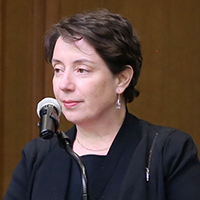
Adrienne Stone is a Melbourne Laureate Professor and Director of the Centre for Comparative Constitutional Studies. She researches in the areas of constitutional law and constitutional theory, freedom of expression and academic freedom and has taught constitutional law at Melbourne Law School since 2007. Among her recent publications, she is the author (with Carolyn Evans) of Open Minds: Academic Freedom and Freedom of Speech (2021). With Cheryl Saunders AO she is editor of the Oxford Handbook on the Australian Constitution (2018) and with Frederick Schauer, she is editor of the Oxford Handbook on Freedom of Speech (2021). She is a founding General Editor of Comparative Constitutional Studies.