Current ISA Fellows
VISITING FELLOWS (POSTDOCTORAL LEVEL)
Dr Yance Arizona (January-July 2027)
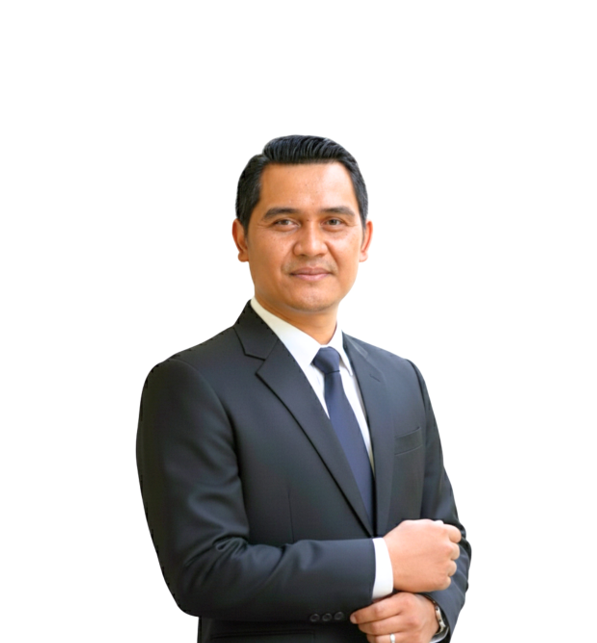
Yance Arizona is a Lecturer in Constitutional Law at the Faculty of Law, Universitas Gadjah Mada (UGM), Indonesia, and Director of its Research Center for Democracy, Constitution and Human Rights (PANDEKHA). His research focuses on constitutional law, judicial politics, socio-legal studies and legal reform, with particular expertise in indigenous peoples’ rights, legal pluralism and the rule of law in Indonesia. He currently serves as Chair of the Praesidium of the Indonesian Socio-Legal Studies Association (ASSLESI), Founder and Senior Partner of Pillar Law Firm, and Head of the Permanent Committee on Constitutional and Administrative Law of the Indonesian Bar Association (PERADI), Rumah Bersama Advokat. Yance holds a PhD from Leiden University, as well as postgraduate qualifications in socio-legal studies and constitutional law.
During his fellowship, Yance Arizona will undertake a research project titled “Constitutional Engineering and the Reform of Advocate Law in Indonesia.” The project examines how constitutional adjudication can stimulate legislative reform of Indonesia’s legal profession, using the Indonesian Constitutional Court’s Decision No. 126/PUU-XXIV/2026 as its primary point of analysis. It explores the Court’s role in shaping reform of the Advocate Law and considers institutional and regulatory challenges affecting the independence, accountability and professionalism of lawyers in Indonesia. Combining doctrinal legal analysis, comparative constitutional law and socio-legal approaches, the research will also examine regulatory models from selected Global South jurisdictions. The project aims to contribute to scholarship on constitutional engineering and the legal profession while developing recommendations for the reform of Indonesia’s Advocate Law, including in relation to bar associations, advocate education and licensing, professional ethics, disciplinary mechanisms and public accountability.
VISITING FELLOWS
Andre Chua (September-November 2026)

Andre Chua holds an LLM from the University of Toronto and an LLB with First Class Honours from the National University of Singapore (NUS). His research interests include comparative constitutional law, constitutional theory and Asian legal systems. He has undertaken research with the NUS Centre for Asian Legal Studies (CALS) and Singapore’s Ministry of Law, studying constitutional law, legal history and the rule of law. His engagement with Indonesian law includes delivering a lecture at Universitas Gadjah Mada (UGM) under the CALS–UGM Peer Learning Initiative. Under the initiative, he has also published comparative research on Indonesian and Singaporean law. Andre’s work has been awarded the Singapore Rule of Law Essay Prize and he has been named the Regional Winner for Asia in the Law category in the Global Undergraduate Awards. His publications have appeared (or are forthcoming) in the Law Quarterly Review, University of Toronto Law Journal, Conveyancer and Property Lawyer, and Singapore Journal of Legal Studies among others.
During the Ibrahim Sjarief Assegaf Visiting Fellowship, Andre will examine the relationship between Indonesia’s Constitutional Court and legislature through the lens of judicial-legislative dialogue. His project, “Dialogue Theory in Indonesia: Constitutional Disobedience and the Limits of Judicial-Legislative Dialogue,” considers what happens when Indonesia’s legislature re-enacts provisions previously struck down by the Constitutional Court, even though Indonesia does not have a formal legislative override mechanism. Using doctrinal analysis of constitutional provisions, legislation and Constitutional Court decisions, the research will explore whether existing dialogue theory adequately explains Indonesia’s strong-form constitutional review system. It will also draw briefly on comparative sources, such as Taiwan and South Korea, to consider whether the Indonesian experience reflects a broader challenge for constitutional orders with strong-form courts in civil law systems.