Katie Robertson
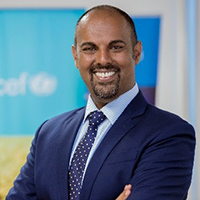
"Make a difference where you are"
A Conversation with Katie Robertson
As a pioneer of practical legal education, and champion for human rights both in Australia and internationally, Katie Robertson’s life and career demonstrates the link between the legal academy and the practical advancement of human rights issues in society.
Katie is a lecturer at the Melbourne Law School, and holds positions as the Assistant Director of the Melbourne Law School clinics program, and Associate Director of the Peter McMullin Centre on Statelessness. Katie is the founder of the Stateless Legal Clinic, a national legal service which engages Juris Doctor students at the Melbourne Law School in a holistic program which aims to assist stateless children to obtain Australian citizenship.
Before embarking on a career in human rights, Katie studied a dual degree in arts and law at the University of Melbourne. While Katie enjoyed learning about politics, history, and social justice through her arts degree, she admits that she did not really enjoy her legal studies. Katie found the law school’s historical emphasis on black-letter, substantive law to be disenchanting, and too often focused on issues which did not matter to real people.
Upon graduating from her law degree, Katie completed her articles at Maurice Blackburn Lawyers. As a graduate, Katie first rotated through Maurice Blackburn’s Sunshine office, where she worked predominantly with members of the migrant community. Looking back, she feels that this experience “informed and challenged my idea of what human rights lawyering is”. While many students learn about human rights in the context of big institutions in Geneva or New York, Katie is of the view that “if you want to do meaningful, impactful human rights work, get out in your local community and make a difference where you are”. Katie’s experience getting “out bush, and working regionally and remotely” is one which she wholeheartedly recommends to students looking to make an impact in the world of human rights.
Katie left Maurice Blackburn to take up a range of roles which continued to expand her skillset as a human rights lawyer, and make an impact both in Australia and abroad. As a lawyer at Aboriginal Legal Aid in the Northern Territory, Katie worked to support Indigenous Australians during the discriminatory Northern Territory Intervention, where the federal government suspended the Racial Discrimination Act in order to implement a range of paternalistic policies against Indigenous Australians in the Territory. Katie also worked to support a legal team in Cambodia which assisted victims of the Khmer Rouge, giving her experience working on human rights issues on the international stage. She recalls a particular matter in which she supported an 80-year-old Cambodian victim of the Khmer Rouge to testify against the perpetrators who had contributed to the loss of his family, including his 6-year-old daughter. “To sit in court that day and see him stand up and face the three remaining perpetrators on trial for war crimes, and tell them about the impact the tragedy had on his life was something I will never forget.” After this international work, Katie admits that she was not sure what her next step would be, but she ultimately moved back to Melbourne and applied many of her newly acquired skills in the field of strategic, public interest litigation.
Returning to Maurice Blackburn, Katie took on cases which often concerned the plights of individuals or small groups but, if successful, could give effect to broader social change. Early on, Katie undertook many cases working for people who had come to Australia seeking asylum and, specifically, newborn children who were being held in immigration detention. Katie’s work also led into other areas of the law. Katie assisted the plaintiff in Fertility Control Clinic v Melbourne City Council, a seminal case where a Melbourne abortion clinic sought to create safe access zones for women seeking reproductive healthcare. While giving effect to broad social change was a focus for Katie’s work in the social justice team at Maurice Blackburn, Katie also recalls how her team used the court system to assist vulnerable individuals. During the period of offshore immigration processing, Katie worked to “hold up the process” in the face of the “rapid removals” of individuals and families from detention centres to Nauru and Manus Island. While Katie’s career in strategic litigation demonstrated to her the power of the court system to change lives and influence the law, Katie sees litigation as only part of the lawyer’s “toolbox”, and believes that great human rights lawyers also “think carefully about political engagement, media and communication, and social campaigning”. In this sense, Katie encourages emerging lawyers in the human rights space to build their toolbox, and use all available mechanisms to bring effect to real, positive change.
While Katie remains active in the human rights space, she now dedicates much of her time to the clinics program at the Melbourne Law School, where she is Assistant Director. Katie’s work responds to the many students who were “crying out for practical experience”. Katie is passionate about creating a clinics program which does more than provide students with something to put on their resume. Instead, she wants to deliver a program that gives students real-world experiences which are genuinely beneficial for themselves and their practice of the law. “It’s learning you just can’t get from a textbook: to sit down face-to-face with a client and talk to them about their rights in an empowering way, or listen to clients taking about what justice means to them, in their own words, is such a rewarding, valuable experience”. Katie believes that many students graduate from law school with great legal knowledge, but without the ability to “sit down and talk to an ordinary person about their rights… this is what the clinic programs tries to address”. While all law schools teach students substantive legal doctrine, Katie aims to ensure that graduates of her programs have real-world skills.
Katie encourages students interested in a career in human rights to focus on the causes which matter to them. “Back yourself,” Katie says, “find what you are passionate about and harness it” to give effect to positive social change.