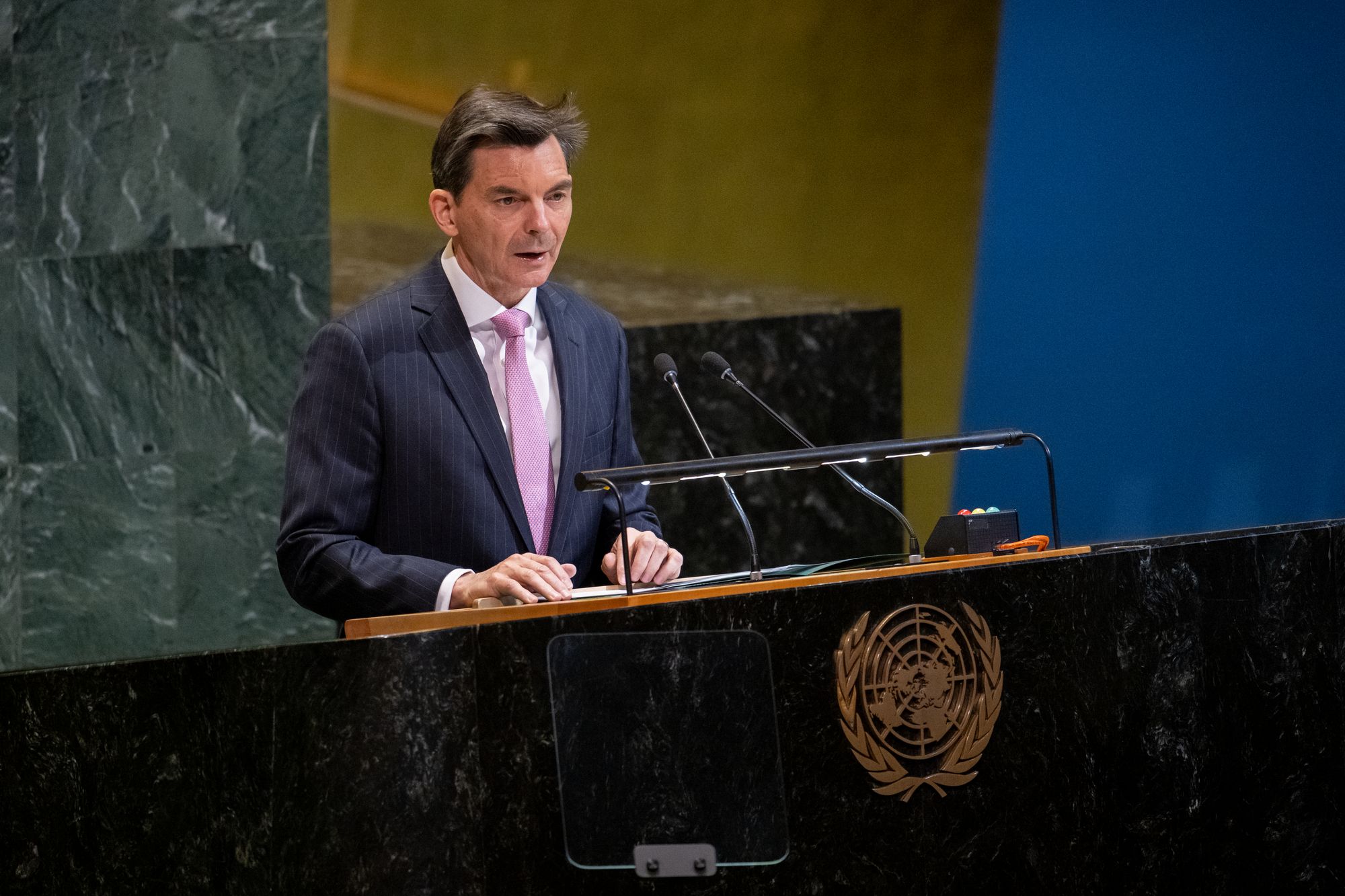
Since graduating from the University of Melbourne in 1987 with a combined Bachelor of Arts and Bachelor of Laws*, His Excellency Mr James Larsen has embarked on an inspiring diplomatic career that’s taken him around the world.
Now, he’s Australia’s Ambassador and Permanent Representative to the United Nations at the UN headquarters in New York City.
We asked the Ambassador what it’s like to work in the United Nations, how to pursue a career in diplomacy, and how his studies at Melbourne Law School helped lay the foundation for where he is today.

A day in the life of a UN representative
Making a difference through diplomacy
At the heart of global diplomacy where 193 nations converge to negotiate, contest and shape the international order, Australia’s Ambassador to the United Nations – and a Melbourne Law School alum – sees each day unfolding at the intersection of international law, policy and geopolitics, requiring a constant balancing of national interests with collective global priorities.
Diplomacy is both intellectually demanding and deeply human work, requiring careful judgment about when to hold firm and when to find compromise.
“At its core, this role is about finding practical ways to turn principle into progress,” the Ambassador reflects.
What he finds most rewarding is the knowledge that his daily efforts – incremental and often complex – can have real impact beyond New York, helping to uphold international law, support vulnerable communities, and contribute to a more stable and cooperative global environment.
Even small steps can matter when you’re working with others to shape outcomes that extend far beyond the room.
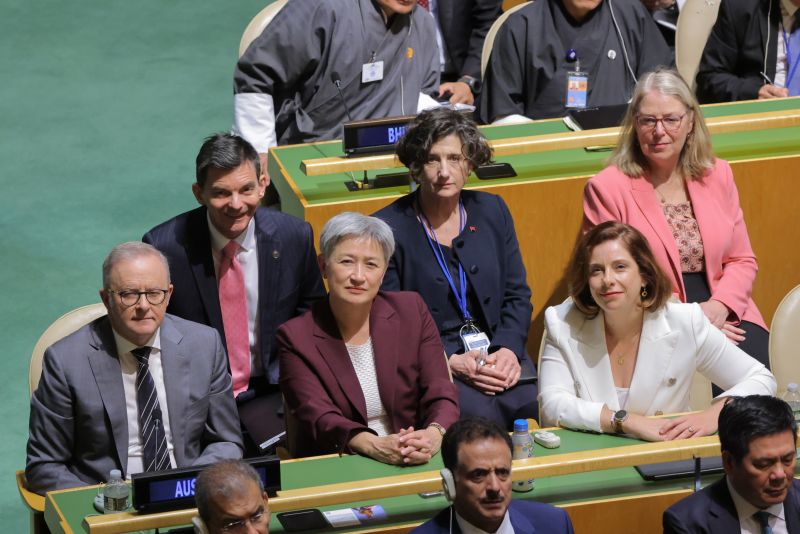
No two days at the United Nations are ever quite the same, but each carries a common thread: a sense of responsibility to represent Australia with clarity, integrity and purpose.
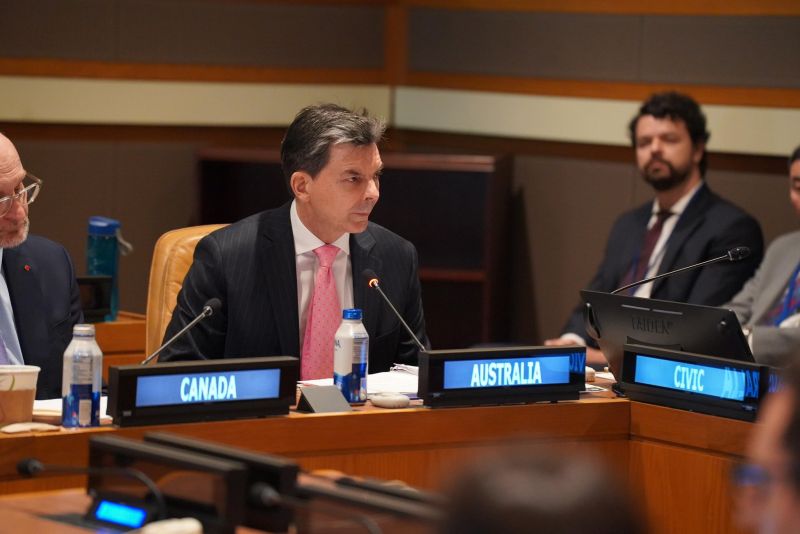
“Much of my time involves engaging with governments, civil society and business to secure support for Australian objectives,” the Ambassador explains. “Key broader Australian priorities include international peace and security with a particular emphasis on conflict prevention; international environment and oceans protection including climate change; and digital futures, including norms and rules relating to rapidly developing technologies.”
Shaping Australia’s contribution to global humanitarian, peacekeeping and development efforts means standing up for the sovereignty and territorial integrity of states like Ukraine in the face of external aggression; pushing for better adherence to international law and better protections for humanitarian workers in conflict situations; and pursuing stronger adherence to rules on maritime navigation, resources and boundaries – to name only a few examples.
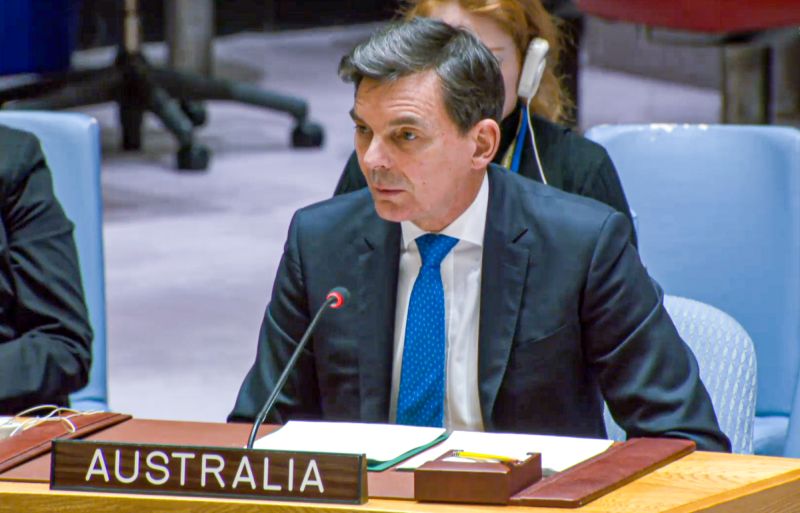
How the UN works
In terms of daily operations, the UN New York is somewhat similar to a national parliament.
The General Assembly, which functions as a broadly representative body and includes all 193 UN member states, deals with the full spectrum of UN work, including human rights, development, international law, budgetary matters and economic and social development.
Six principal committees support this work, each feeding into the General Assembly’s annual agenda.
The Security Council occupies a special place in the system as the organ empowered to authorise use of force and to create legally binding rules for all states to uphold international peace and security. Reflecting the immediate post–World War II order, the Security Council comprises five permanent members – the US, China, Russia, the UK and France – along with ten elected members, each serving a two-year term. (One of the Ambassador’s top priorities is building support for Australia’s bid to be elected to the Security Council for the 2029–30 term.)
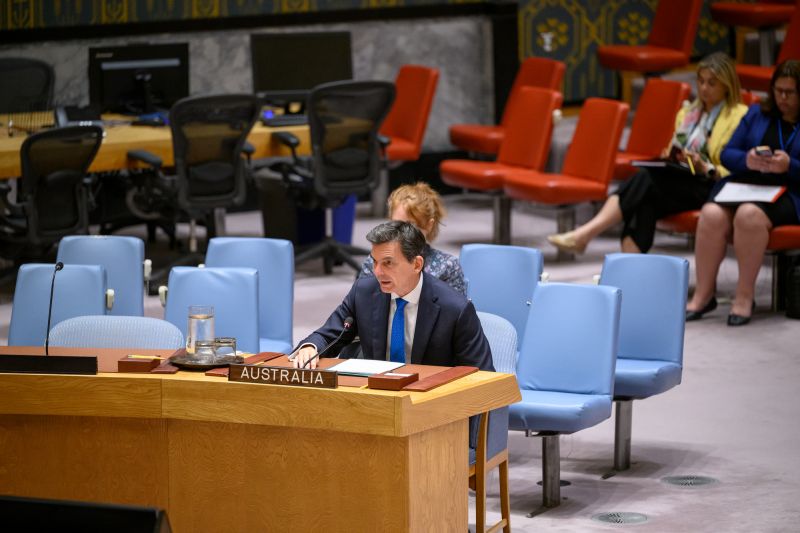
It’s a fascinating environment where there is always some intrigue or knotty problem to be solved. The key challenge is to always keep in mind how to translate high-level thinking into practical on-the-ground outcomes that make a difference to Australia’s national interests.
On a daily basis, the Ambassador divides his time across a wide range of activities.
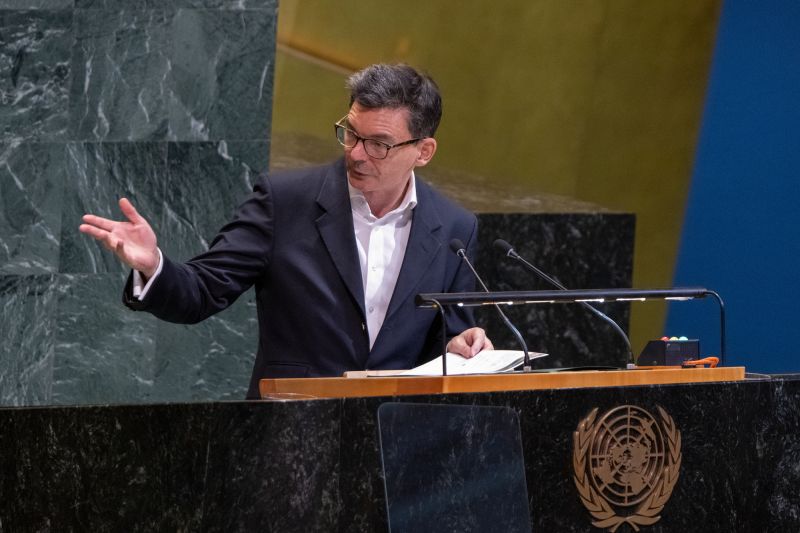
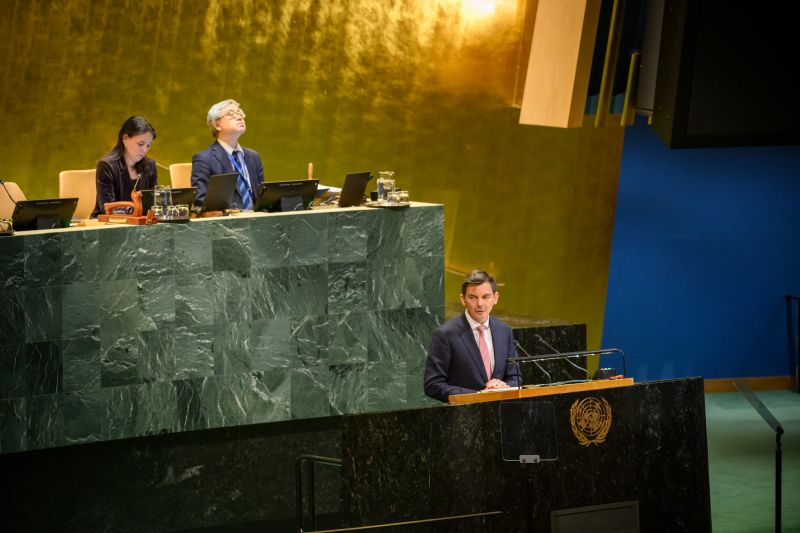
“My day-to-day work is incredibly diverse and includes formal speeches in the General Assembly or Security Council; negotiations with other member states regarding resolutions or statements; explaining Australian positions to non-governmental organisations; supporting Australian delegations attending annual fora such as the Commission on the Status of Women and the Permanent Forum on Indigenous Issues; and working with international partners and the UN Secretariat on the major geopolitical challenges facing the global community.”
As part and parcel of this work, the Ambassador engages regularly with key longstanding partners, including our neighbours in Oceania, as well as Japan and Korea, EU member-states, and the ASEAN nations of Southeast Asia. It’s equally important to liaise with countries where UN New York will often be one of Australia’s most regular and important contact points, such as certain countries in Africa and in the Caribbean.
“Leading committees and chairing negotiations also occupies a lot of my time,” the Ambassador continues.
For instance, he has recently been appointed as the first Australian to chair the UN’s Third Committee, which deals with global human rights issues. As part of this role, he has chaired the review of the international regime governing the illicit trade in small arms and light weapons. He is now chairing negotiations for a global consensus around the legal, social and economic consequences of rising sea levels.
“Much of the work also happens in moments that go unseen,” the Ambassador adds, “from quiet conversations in the General Assembly to late-night negotiations over language that will shape global outcomes.”
“All these roles provide an opportunity to contribute outcomes that support Australian and broader regional interests in stability, economic development and security.”
Australia’s legacy in the UN
“The United Nations is the world’s premier multilateral institution and by far the most representative international forum with 193 member states. It sits at the epicentre of the post–World War II international rules-based order.”
I’m reminded daily how much of an honour and privilege it is to represent Australia in this place.
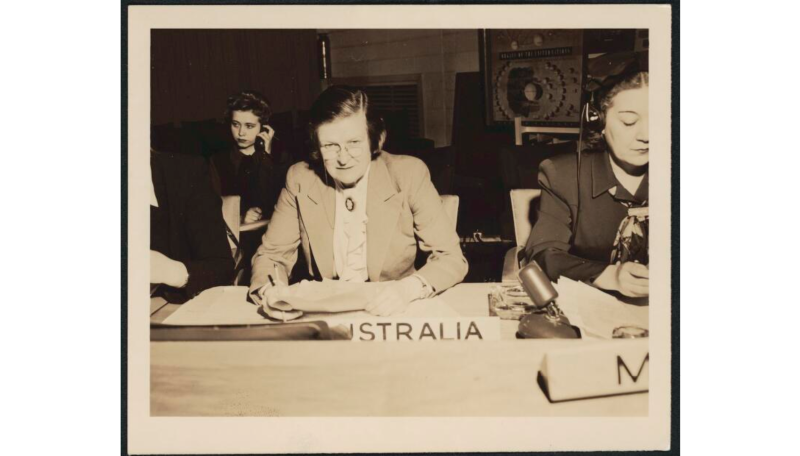
The Ambassador emphasises Australia’s powerful legacy in the United Nations from the time of its founding to the present day.
“As a founding member, we were instrumental in drafting the UN Charter and have always been a strong voice for the interests of smaller states, human rights and economic development, all of which we continue to champion today.”
For the Ambassador, part of the pride in serving as Australia’s United Nations Representative comes from taking up the torch held by so many eminent Australians before.
“Some of the great Australian names in UN lore include Herb (Doc) Evatt, who led negotiations for the UN Charter and served as the third president of the General Assembly; Jessie Street, who championed the inclusion of gender equality as a core UN priority; Melbourne Law School’s own Gareth Evans, who pioneered the principle of ‘responsibility to protect’; and, of course, another Melbourne Law School alum and faculty member, Hilary Charlesworth, who currently serves on the International Court of Justice.”
Looking ahead
In closing, the Ambassador reflects, “In many ways, a day at the United Nations is a study in constant motion – moving between the chamber and the corridor, between formal statements and quiet negotiations, between long‑standing partnerships and newly forged alliances. It is where the language of international law meets the realities of geopolitics, and where progress often depends as much on persistence and relationships as it does on principle.
Representing Australia in this environment demands not only legal and strategic acuity, but also adaptability, diplomacy and a clear sense of purpose.
Each day presents a different challenge, yet the objective remains constant: to translate complex global discussions into meaningful outcomes that advance Australia’s interests and contribute to a more stable, equitable international order.
Looking ahead, the Ambassador remains focused on strengthening Australia’s voice in the multilateral system and building the partnerships needed to secure outcomes and shape the rules and institutions that will define the decades to come.
How to succeed in diplomacy
Inspired by this line of work? We asked the Ambassador how current students, or other interested parties, can set themselves up for success in international relations. He shared some of the key traits that aspiring diplomats should cultivate.
-
Dedication
You need to be fully dedicated to working in your country’s best interest.
First of all, the job of a diplomat is to be laser-focused on – in my case – Australia's national interest.
“So you have to be prepared to stand up for and advocate for Australia and what the Australian government of the day wants to achieve in the relevant international space.”
-
Integrity
A strong moral compass and sense of ethics are essential.
Secondly, you have to have high integrity and strong values, and you have to be constantly reflecting on your own credibility.
“Am I representing my country with the highest degree of integrity I possibly can? Am I committed to values that underpin Australian democratic norms and principles, Australian values about human rights, gender equality and other issues?”
-
Empathy
The key to effective negotiation is the ability to understand the other party’s perspective.
To be a really effective diplomat, you have to be thinking, how do I put myself in the shoes of the other side?
“So if you're negotiating with Indonesia, if you're negotiating with Timor Leste or Afghanistan or Iran, you need to think, OK, well, how are they approaching this issue and how can we work towards a mutually agreeable solution?”
Laying the foundation for an inspiring career
Before the Ambassador started his career as a diplomatic trainee in 1992, his first foray into international relations was during his studies at the University of Melbourne.
“I studied international relations and international law as part of my arts and law degrees at the University of Melbourne and I always had an interest in the international space.”
He admits that, despite being a diligent student, he found his law subjects challenging.
“I got great grades in my arts subjects, but I actually found studying law quite hard.”
The challenge never put him off, though: he always maintained a strong interest in law.
“I think law is such a fantastic foundational building block to understanding the dynamics of so many things that are fundamental to how our society works.”

He reflects on how studying at Melbourne Law School helped shape his interests and his eventual career path. Teaching staff and peers alike made a strong impression on him.
“The immediate access to first-class legal minds who were interested in you and in what you were doing – that made a massive difference.”
We had the sort of teachers who inspired you not just about what the law was, but what you could do with the law and how you could use the law to make a difference.
“I still have a great cohort of friends and colleagues who I was at university with and who I keep in contact with.”
“That experience of being on campus with a cohort of people you admire and like and with teachers you respect, that sense of shared purpose – all of that really is something I reflect on very, very positively and very warmly.”
“I think that's an incredibly important formative experience. And that's something that a really great school can deliver.”
As Melbourne Law School approaches its 170th anniversary, we asked the Ambassador to reflect on what this milestone means for the Melbourne Law School community and beyond.
“What is it that the Law School does that makes a difference to people?” he muses.
“Fundamentally, it's how it provides you with the intellectual framework to work through issues, to solve problems, to go beyond just knowing the technical answer to an issue, but how do you use all of that knowledge and learned experience to actually solve the problems that are going to challenge us in the future?”
And so when I think about the 170th anniversary, I think of that incredible cohort of contributors to Australian life that Melbourne Law School has produced: remarkable jurists, extraordinary barristers, prominent talented individuals in many different fields.
“And all of them owe some of what they've contributed, no doubt, to the education they received at Melbourne Law School.”
“So the challenge for the future is, even in an incredibly different and rapidly changing world, how do we hold onto that and how do we make sure we give that gift to future generations?”
***
* Note: The Bachelor of Laws is no longer offered at Melbourne Law School. Current undergraduate students are encouraged to study law breadth subjects and consider enrolling in the Juris Doctor after completing a bachelors degree in a discipline other than law.