Hub Members
The Hub Members are valuable contributors and collaborators to the Indigenous Law and Justice Hub's programs.
Members of the Indigenous Law and Justice Hub are close collaborators in academic and advocacy work. In addition to various project collaborations across members various areas of interest, members regularly meet together through the MLS Indigenous Legal Scholarship Community of Practice.
If you are interested in becoming a member of the Hub please contact mls-indigenous@unimelb.edu.au
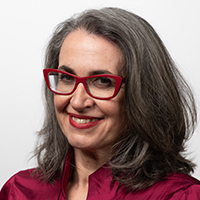
Professor Ann Genovese
Ann Genovese is a Professor at the Melbourne Law School. She teaches and researches in the fields of public law, history, and jurisprudence. She is a Law and Humanities specialist; with expertise in explaining and caring for the archival sources, and techniques, that show how Australian people have lived with their law. Her work has been integral to the establishment of an emergent practice – jurisography. She publishes widely across feminist jurisprudence, history, Indigenous and non-Indigenous relations, law and interdisciplinary fields. She has been the recipient of six ARC grants over the course of her career, often working with institutions, to research the history, theory and lived experiences of the relations between Australian law and its diverse publics. Her publications include: Rights and Redemption: History, Law, Indigenous People (Sydney: UNSW Press, 2008) (with Curthoys and Reilly); Sovereignty: Frontiers of Possibility (University of Hawaii Press, 2013) (with Evans, Wolfe, Reilly); Australian Critical Decisions: Remembering the Koowarta and Tasmanian Dam Case (Routledge, 2017), The Court As Archive (ANU Press, 2019) (with Rubenstein and Luker); and Feminist Jurisography: Law, History, Writing (Routledge, forthcoming 2022).
Ann welcomes conversations about supervision and collaborations, on topics and methods related to Indigenous- non-Indigenous relations; Australian archival stories and ethics; and feminist and Queer jurisprudence and history.
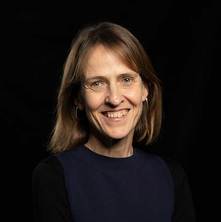
Professor Heather Douglas
Heather Douglas joined Melbourne Law School in 2021 and teaches and researches in the area of criminal law and procedure. Heather researched the operation and application of law in the context of Australian indigenous–settler relations in her PhD and her book, Indigenous Crime and Settler Law: White Sovereignty After Empire, co-authored with Mark Finnane which was published by Palgrave in 2012. Heather has long had an interest in the experience of law school for Aboriginal and Torres Strait Islander students, and has written a number of articles on this topic. She is currently working on an edited collection with Nicole Watson titled Legal Education Through an Indigenous Lens: Decolonising the Law School. Also with Dr Nicole Watson, she assisted in the coordination of the Indigenous Judgments Project and the resulting co-edited collection, Indigenous Legal Judgments: Bringing Indigenous Voices into Judicial Decision Making, that was published by Routledge in 2021.

Alex Bowen
Alex is a PhD candidate in the school of languages and linguistics, University of Melbourne, and a Research Fellow with the Hub. He grew up as a white settler on Wurundjeri country, graduated from MLS, and practised law in Victoria and the Northern Territory, particularly working in circuit courts in East Arnhem Land with Yolŋu and Warnindilyakwa people. His research focuses on cross cultural communication about law and justice in the context of colonial and monolingual assumptions. Alex has a range of experience of learning cross-culturally with Aboriginal experts in language and law in the Northern Territory and Western Australia about justice, communication, translation and interpreting.
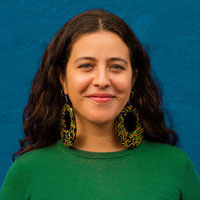
Kate Jama
Kate Jama is a PhD Candidate at Melbourne Law School and Research Fellow with the Melbourne Centre for Law and the Environment. Kate’s research examines how Australian settler law and technology work together to enable extractive practices to the seabed surrounding so-called Australia. Kate’s research occurs in tandem with her creative arts practice. In 2023, in collaboration with Timmah Ball, Kate launched the publication Aqueous Archives. Through poetry and non-fiction, Aqueous Archives illuminates stories, histories and knowledges that exists beneath colonial narratives connected to the Fremantle port, land development, the ocean and migration. Kate is a co-convenor of the New Reading Group.
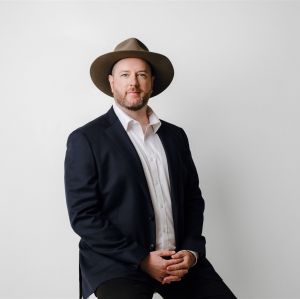
Marcus Stewart
Marcus Stewart is one of Australia’s most renowned and trusted Indigenous leaders, a powerful and authentic media commentator and a respected adviser to Fortune 500, NASDAQ and ASX top 20 companies. As the inaugural Co-Chair of the First Peoples’ Assembly of Victoria, Marcus led nation first reform with the establishment of the Yoorrook Justice Commission, the first truth telling process in Australia with the strength and power of a royal commission.
In this role, Marcus became a trusted partner of Government, setting up the design and infrastructure for Australia’s first Treaty, while also not shying away from holding Government to account through the media.
Media outlets will often call on Marcus for his authentic commentary for television, radio and print, as his communication style has cut-through and heart. Marcus has nearly two decades of experience advising some of the world’s biggest companies on strategy, change management and public policy.
Marcus is a proud Nira illim bulluk man of the Taungurung Nation.
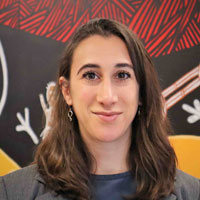
Sarah Schwartz
Sarah Schwartz (BA LLB LLM) is a lawyer and writer focusing on the harms of police and prisons, Aboriginal deaths in custody and rebellious and movement lawyering. She is a Lecturer at Melbourne Law School and teaches the clinical subject Indigenous Legal Advocacy Clinic. She is also the Principal Managing Lawyer of the Wirraway Practice at the Victorian Aboriginal Legal Service and represents clients in the areas of police accountability, the rights of people in prison and coronial inquests into Aboriginal deaths in custody. Sarah is committed to learning from and walking alongside her clients and supporting their fight for systemic change, accountability, and justice. Sarah was awarded a John Monash Scholarship in 2019 and completed a Master of Laws at Harvard Law School focusing on critical race theory, policing, prisons and movement lawyering. Sarah has published and presented on the harms of privatised prison healthcare, accountability for Aboriginal deaths in custody, police accountability, and the criminalisation of Aboriginal children in state residential care.
Recent publications include (selected):
- 'Prison healthcare as punishment - the Killing of Veronica Nelson' (2024) 253 Overland Literary Journal [forthcoming]
- 'Paying for Freedom: Community Payment of Fines as Collective Resistance to Australia's Criminalisation of Race and Class' (2024) 47(1) University of New South Wales Law Journal [forthcoming]
- '3 ways the Victorian government’s bail reforms fall short – and why it must embrace ‘Poccum’s Law’ (16 August 2023) The Conversation, (with E Russel and A Lachsz)
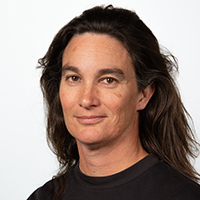
Dr Olivia Barr
Dr. Olivia Barr is an Associate Professor at Melbourne Law School. She is a non-Indigenous lawyer-turned-academic, who grew up on Whadjuk Noongar Boodja and now lives on Wurundjeri Country. She has previously worked as a government solicitor, in law reform and for the United Nations Permanent Forum on Indigenous Issues, and studied at UWA, UBC (Canada) and Melbourne. Olivia researches in the interdisciplinary field of law and humanities, with expertise on the many relationships between law, place and sovereignties.
Olivia has three main research areas. She has had a long-standing interest in the overlooked topic of legal movement and its role in colonisation, including the role of walking, political marches and public ceremonies, as captured in her book, A Jurisprudence of Movement: Common Law, Walking, Unsettling Place (Routledge, 2016). She is interested in mapping out a new field of inquiry on law and place, which links legal theory with several other disciplines, including geography, art, architecture and geology, to offer insights into the localised, grounded and overlapping nature of multiple laws. She also conducts research that applies these theoretical insights to more practical legal settings, including investigating future possibilities for state recognition of First Nations’ sovereignty, sovereignties, and self-government.
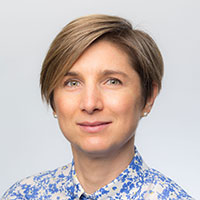
Dr Erin O’Donnell
Dr Erin O’Donnell is a water law and policy expert, recognized internationally for her research into the legal rights for rivers and Indigenous rights to water. Since 2018, Erin has been a member of the Birrarung Council, the voice of the Yarra River in Melbourne. In 2023, Erin commenced an ARC-funded research fellowship to explore the opportunity of treaty to address aqua nullius, increase Traditional Owner power and resources in water, and create more sustainable and legitimate settler state water laws.
Recent papers on topics that relate to the work of the Hub:
- E O’Donnell (2023) Water sovereignty for Indigenous Peoples: Pathways to pluralist, legitimate and sustainable water laws in settler colonial states. PLOS Water 2(11): e0000144.
- S Jackson, E O’Donnell, L Godden, & M Langton (2023). Ontological Collisions in the Northern Territory’s Aboriginal Water Rights Policy. Oceania, 93(3), 259–281.
- E O’Donnell, M Kennedy, D Garrick, A Horne and R Woods (2023) ‘Cultural water and Indigenous water science’ Science 381(6658), 619-621.
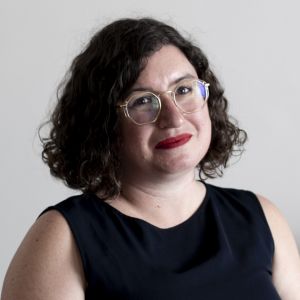
Jordana Silverstein
Jordana Silverstein is a Senior Research Fellow in the Peter McMullin Centre on Statelessness at the Melbourne Law School, and a historian of statelessness, refugee policy, settler-colonialism, and Jewish history. She is the author of Cruel Care: A History of Children at our Borders (2023), which was shortlisted for the Non-Fiction prize in the Victorian Premier's Literary Awards. She is also the author of Anxious Histories: Narrating the Holocaust in Jewish Communities at the Beginning of the Twenty-First Century (2015) and co-editor of In the Shadows of Memory: The Holocaust and the Third Generation (2016) and Refugee Journeys: Histories of Resettlement, Representation and Resistance (2021).
Jordana is dedicated to thinking about how her work can be useful to communities and individuals outside the university space. She uses oral history and archival research methodologies, often in ways which try to create spaces for solidarity and community-building, and for thinking against and outside of the settler state.