Asian Law Centre: Since 1985 and still growing.
When the Asian Law Centre was founded at Melbourne Law School forty years ago, Australian engagement in Asia was more of a concept than an established practice.
In 2025, Australia’s leading institute for legal engagement with Asia celebrates four decades of influence, commitment, and collaboration with Asian judiciaries and legal systems.

Above: From left, Kathryn Taylor, manager; and Professor Sarah Biddulph, director of the Asian Law Centre.
Director of the Asian Law Centre, Professor Sarah Biddulph says the Centre’s impact has been crafted through the longevity of its relationships. “At the beginning, the Centre was focussed on establishing a cohort of Asian-literate lawyers, but that mission has expanded into an array of jurisdiction-focussed projects that have deepened Australia’s engagement with Asia,” she says.
“We live in a world where our default position cannot be ignorance and suspicion. But we have crafted mutual respect with many jurisdictions through longevity. Many peoplefirst associated with the Centre when it began, are still involved. I think that is why the Centre is successful – it is about long-term relationships.”
This commitment to relationships is evident in the Centre’s recent support of women judges from Afghanistan, forced to resettle in Australia during the re-establishment of Taliban governance.
Working with organisations including the Australian Association of Women Judges, the Centre has worked to renew these judges’, careers and identities, by assisting with grants, necessary accreditations, and by providing a professional community that allows them to continue in their careers.
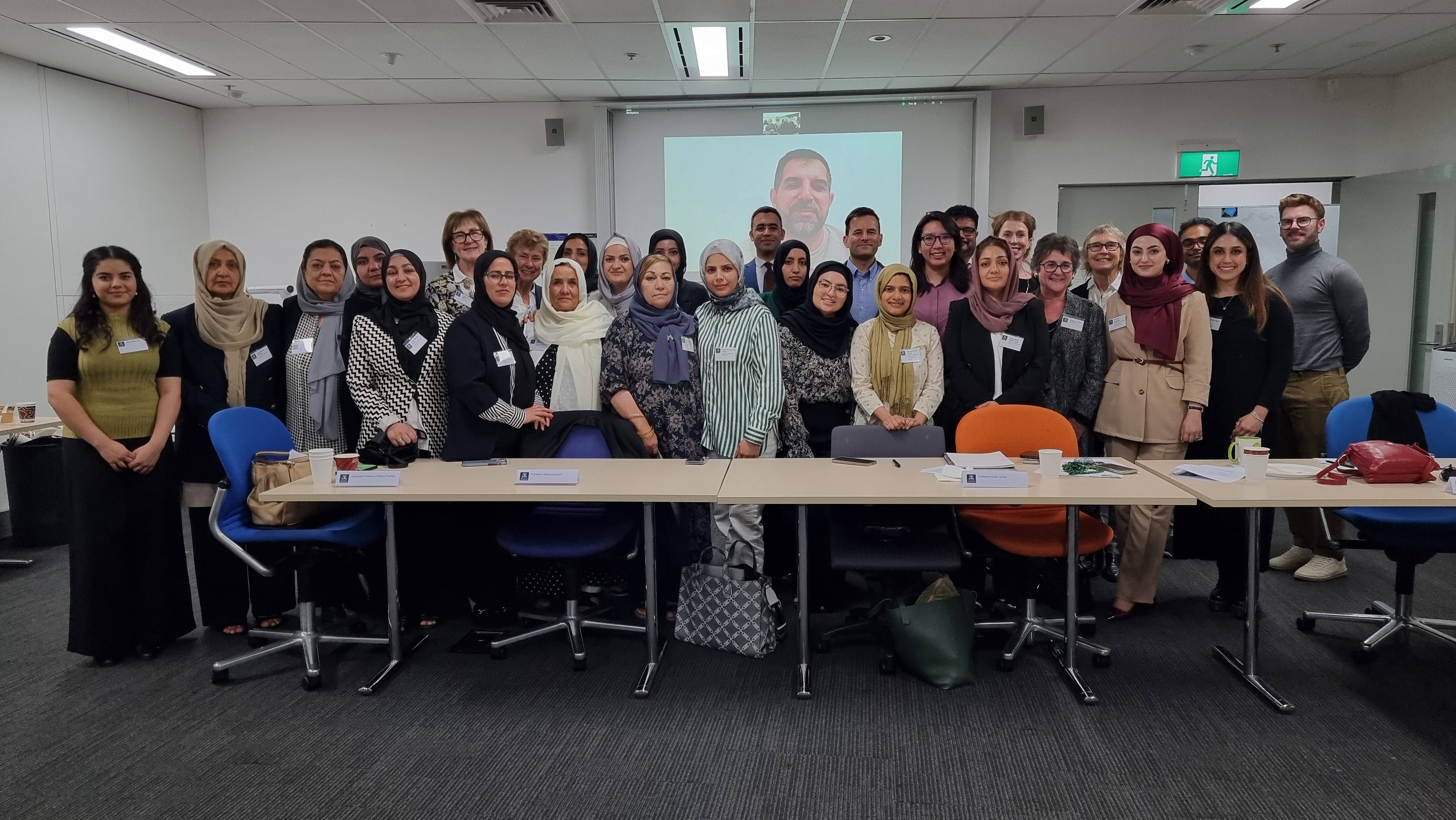
Photo: Afghan women judges and Asian Law Centre members at the ‘Law and Pluralism in Divided Societies: Lessons from Afghanistan and Beyond’ Workshop, at Melbourne Law School, 19 November, 2024.
In 1985, the Victoria Law Foundation funded a feasibility study on the creation of an Asian Law Centre at Melbourne Law School. Soon to be its founding director, Professor Malcolm Smith agreed to undertake the study. The outcome was successful, and the Commonwealth and Victorian governments provided support. The Asian Law Centre was launched in October 1985 by the then Attorney-General of Victoria, the Honourable Jim Kennan MLC. Its principal objective was to become the focal point in Australia for work on Asian law and business.
Its aspirations have grown beyond what was first thought and this month the Centre hosted a dinner and symposium in recognition of its fortieth anniversary. Emeritus Melbourne Law School Professor Michael Crommelin AO, speaking on the Centre’s establishment, noted in its first 15 years it had reached significant achievements, including ‘extensive research and publications (including The AustralianJournal of Asian Law); innumerable doctoral research supervisions; broad ranging and highly successful teaching programs…practical and popular professional development programs, here and overseas; enduring international relationships with universities, governments, courts and non-government organisations’.
“This catalogue far exceeds the most optimistic aspirations of those involved in the establishment of the Centre,” he said. Achievements include:
- Judicial visitors program, where judges from Japan and Korea are provided an opportunity to train, study, and engage with judiciary in Melbourne.
- Cooperating with the courts and delivering training on issues of culturally and linguistically diverse litigants.
- Judicial Briefing Papers, which provide an overview of Asian court systems and judicial questions, for Australian judiciary.
- Collaborating with colleagues within university – most recently on the questions of government legitimacy in Myanmar.
- Australian Journal of Asian Law.
Professor Biddulph, says the Centre’s success is because ALC members devote their working life to studying language, law and culture of the jurisdictions and disciplines of their specialty.
“This I think is a concrete demonstration of respect that goes beyond the rhetoric of engagement that so easily dissipates when not backed with practical and sustained commitment to act,” she says.
In a busy anniversary week for the Asian Law Centre, it also hosted a Symposium on Legal Actors and Human Rights as well as a two-day graduate workshop for students on the theme Constructing Legal Narratives in Asia. Presentations were given by students, scholars and judges from Australia, New Zealand, China, Singapore, Indonesia, Japan, Korea, Thailand, Vietnam, India and Bangladesh.
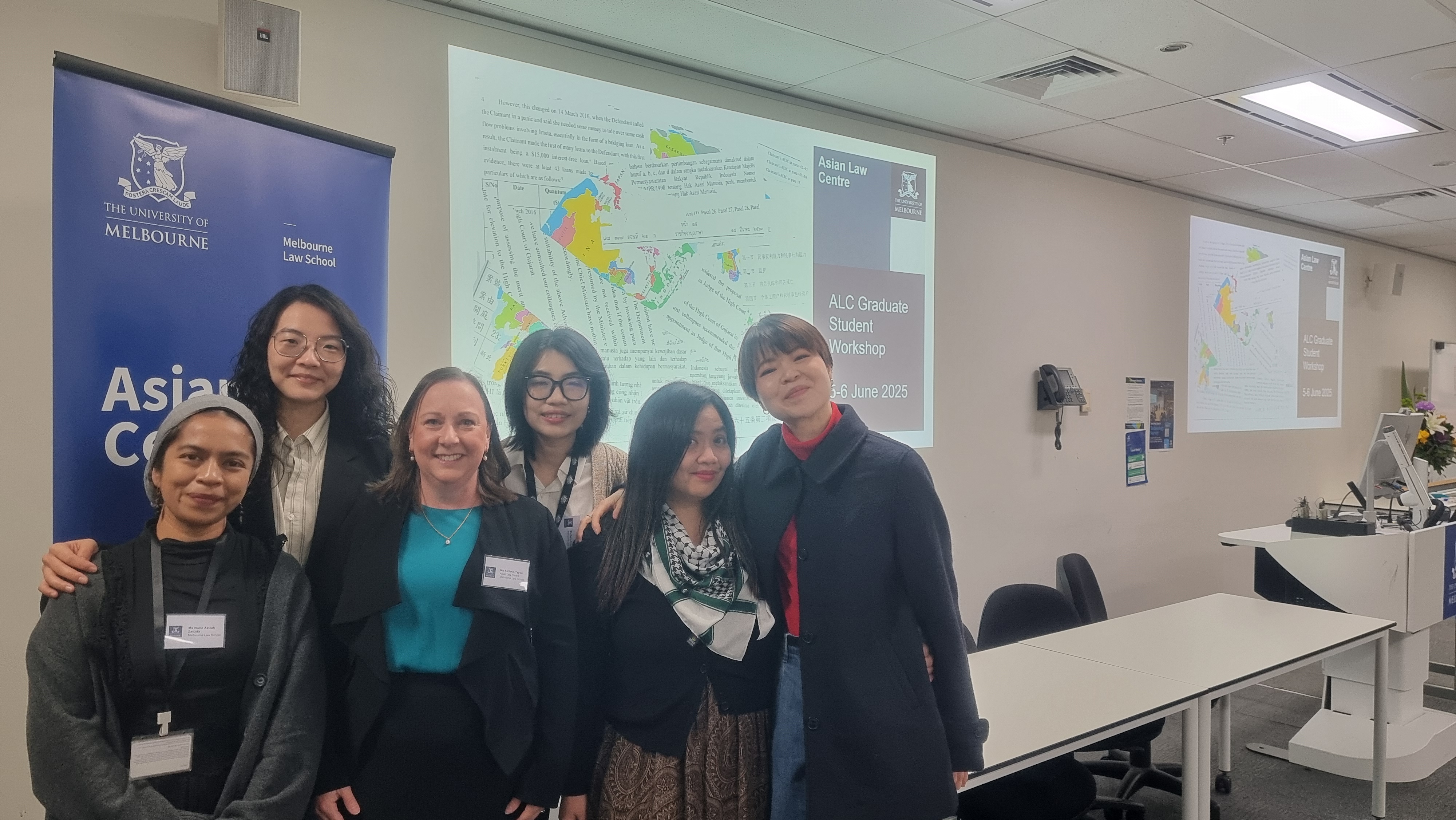
Above: Constructing Legal Narratives in Asia, two-day graduate workshop.
Professor Biddulph says community and engagement is at the forefront of the Centre’s initiatives, as partners from Australia, and across Asia find cross-jurisdictional learning more accessible.
“It is more than research or judicial translation. It centres on creating effective and meaningful relationships, so we all see the merit in engaging with each other,” she says.