Employers challenge right to strike in court
Australian employers are represented in a case before the International Court of Justice that challenges the right to strike, warns Professor Sean Cooney of Melbourne Law School.
Australian employers are represented in a case before the International Court of Justice that challenges the right to strike, warns Professor Sean Cooney of Melbourne Law School.
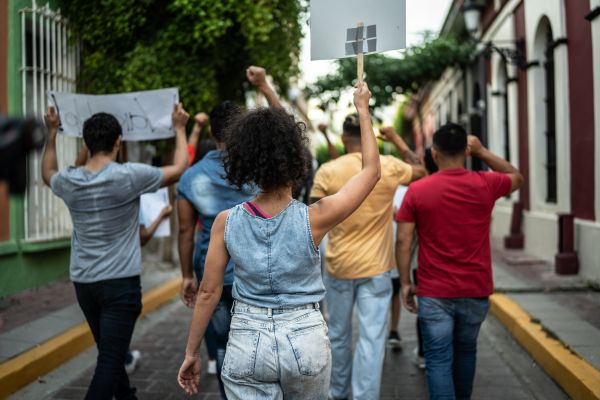
“Many Australians take for granted that workers have a right to strike – that is, the right to withdraw your labour (in whole or in part) for a period of time to show an employer the value of your labour,” Professor Cooney says. “Much of the rest of the world has the same right.
“But now, that right to strike is under threat globally, as employers have gone to the International Court of Justice to challenge the legal principle on which it is based.
“Hearings are expected to begin later this year, and the court will make its decision later this year or early next year.”
The court’s decision will arguably be internationally binding, influencing labour laws around the world, including in Australia, as well as international trade agreements and the decisions of major courts, he says.
The legal principle being tested is whether the right to freedom of association, and the related right to organise – which are both part of international law – do or don’t guarantee the right to strike. They are both part of Convention 87 of the International Labor Organisation (ILO).
The ILO’s decisions are made by member states along with representatives of workers and employers – the Australian representatives are the Australian Chamber of Commerce and Industry and the Australian Council of Trade Unions.

- Professor Sean Cooney
About a decade ago, employers sharply challenged whether Convention 87 could be interpreted as protecting a right to strike; worker representatives strongly opposed this, and the issue has been deadlocked.
“So, the ILO recently decided to refer the question to the International Court of Justice for an opinion,” Professor Cooney says. “That means that for countries like Australia, which don’t have a right to strike in their Constitutions, the main international basis of the right to strike could disappear.
“A threadbare right to strike would continue to exist, but it would be questionable how much value it will have to workers and their unions as they try to insist that governments protect peaceful industrial action.”
Such a decision would also dramatically unsettle a large body of law around strikes by institutions like the Court of Justice of the European Union, the European Court of Human Rights, the Inter-American Court of Human Rights, the Supreme Court of Canada, and the Constitutional Court of South Africa.
Convention No. 87 is designed to protect the independence of workers’ and employers’ organisations from interference by public authorities. It was adopted as a response to authoritarian regimes suppressing unions in countries like Germany, Japan and the Soviet Union in the mid-twentieth century.
Convention No. 87 does not directly refer to a right to strike, but for many decades the ILO’s supervisory bodies have said that it implies the right. “The Convention refers to unions ‘furthering and defending the interests of workers’, and strikes are a critical way to do this,” Professor Cooney says.