Justice relocated: From Afghanistan to Melbourne
Mahtab Fazl left Afghanistan nearly four years ago when Taliban governance returned and women judges became a vulnerable target.
As a judge presiding over cases of violence against women and a member of the International Association of Women Judges, Mahtab sought refuge.
In 2025 she began study at Melbourne Law School to reestablish her legal career.
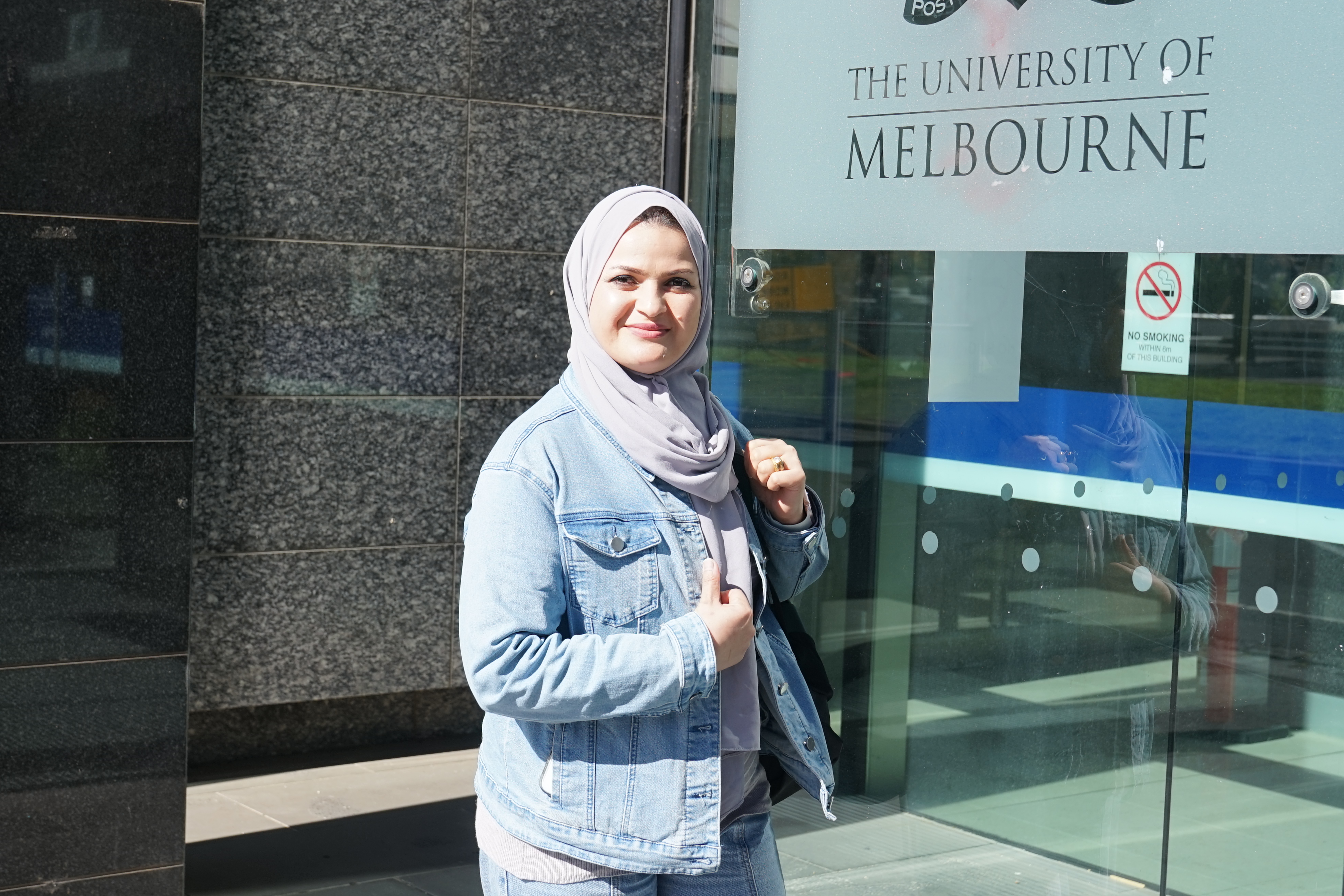
Mahtab Fazl
Signal chats with fellow Afghan women judges now living in Australia, Australian judicial mentors, the Asian Law Centre at Melbourne Law School and future colleagues, have all quickly rallied to support Mahtab through this transition; support she warrants for keeping her motivated and encouraged to pursue an Australian legal career.
“When the Taliban came back to Afghanistan, because of my career, I couldn't stay because it was not safe for me and for my family. First, we went to Mazar city, and then they evacuated us to Greece. We were there for three months before Australia granted us a visa,” she said.
Mahtab is from Herat, which the Taliban seized in August 2021. She had worked as a judge presiding over cases brought within the country’s Elimination of Violence Against Women unit prosecutors, which were first introduced in Afghanistan in 2011.
She says she entered this area of law after seeing and hearing of family hardship in her communities.
“When I was very young, I saw that there were so many families that had tasted hardship, family violence, violence targeting women and girls. But sadly, these women and families didn't understand basic legal rights,” she said.
The International Association of Women Judges and the Association of Australian judges have been integral intermediaries between Mahtab and her colleagues, their relocation, and their new legal communities.
The Association hosted a welcome party for a collection of Afghan women judges newly arrived in Australia. Here, Mahtab and many of her Afghan colleagues met for the first time. They now talk regularly online. “Throughout the past three years, we have helped each other,” she said.
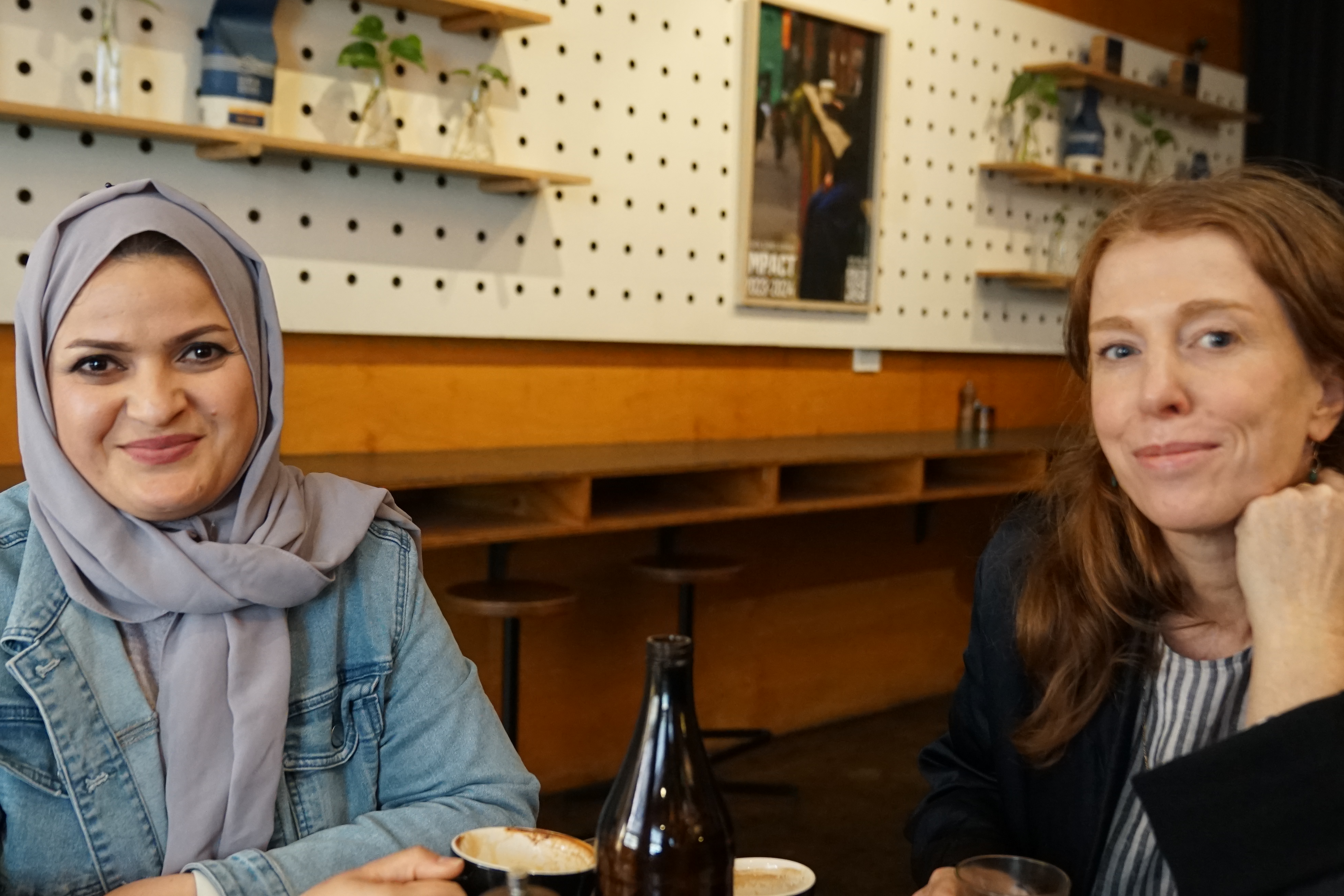
Mahtab Fazl and Professor Kirsty Gover, of Melbourne Law School, a mentor to Mahtab.
Scholars across Melbourne Law School, including the Asian Law Centre have gathered to support Mahtab, as have Victorian judges.
“My mentors have always encouraged me. They know about my story. They have invited me to come to their chambers and to the courts where I have listened and observed some hearings,” she said.
“They know that I'm eager to do this.
“We have a group chat. They are like my family here in Australia.”
Mahtab says she is enjoying her studies and remains eager to practice law in Australia, despite any hurdles. However, she is encouraged by some unexpected similarities between her previous judicial experience, and the Australian legal system.
“In Afghanistan, we worked off the Roman-Germanic legal system. Here in Australia, it is common law, and I need time to study it. But the judicial structure is something that is very similar to how it was in Afghanistan. I was encouraged by that. I thought ‘yes, I can - I can do it. I can work here in the legal field’,” she said.
“I had wanted to study at this university. When I learned more about MLS, I found it perfect and somewhere I would love to pursue my education. It became my first aim in Australia, to learn at this law school.”
Despite settling into a new life in Melbourne, Mahtab remains concerned for young women growing up in Afghanistan.
“There are so many Afghan women now, struggling. Many Afghan women contact me for assistance. Sometimes I give them legal counsel, but that is not much. There is not much I can do because I am so far from Afghanistan,” she said.
“I have three nieces in Afghanistan. They are very talented and are eager to continue with their education.
“When I speak with them, they ask me about the future. Because they are girls, they have to stay at home. I wish I had more to say to them. But there is not much you can say.”
Women living in Afghanistan have no access to higher-level schooling, but the international Afghan community is doing its best through unusual methods, to ensure their countrywomen can still access education.
International projects such as MIIED, Mother International Institute of Education (MIIED), is providing Aghan women in Afghanistan access to online education in native languages with the help of the broader Afghan scholarly community. MLS is partnering with MIIED to support Afghan students and legal professionals, including through the school’s clinical education program.
Mahtab says she hopes to contribute to this project in the future.
“My father and my family supported me in Afghanistan. He said to me, you can go and do anything that you want. He encouraged me. And he said to me, just allocate time to study, and follow your dream,” she said.
“I want to help other Afghan women do the same.”