Online junk-food ads should be banned: Research
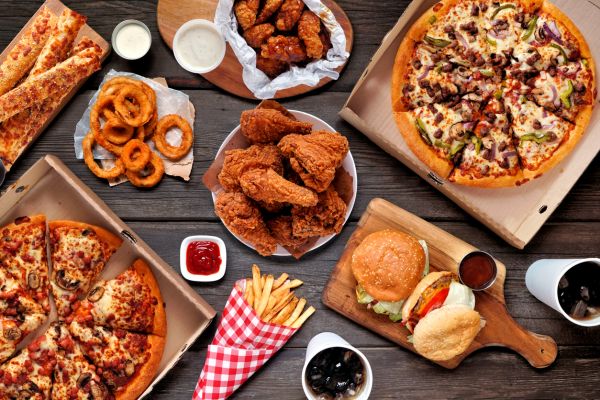
Online junk-food advertisements are being targeted at young men, parents of children, as well as children themselves, linking junk foods with more wholesome activities, according to new research into Facebook ads by Melbourne Law School and the Australian Ad Observatory.
Researchers looked at the images and the stories being told by ads on Facebook, Australia’s biggest advertising platform, and found that many junk-food ads:
- Used ‘sports-washing’ – linking unhealthy food with healthy sports activity or pleasurable spectator sports like football and rugby;
- Used ‘mental-health-washing’, for example, chocolate bars, packaged snacks or fast food being co-promoted with community mental health organisations;
- Are aimed at harried parents, painting a drive-through pickup of fast food as something that saves parents time and quietens children, and;
- Used children’s characters or games.
“They are buying a ‘halo effect’,” says lead researcher Tanita Northcott, research fellow at Melbourne Law School. “Our study shows unhealthy food is being promoted a lot on Facebook in a way that seems to be targeted towards young people, kids and carers.
“These platforms can use powerful data analytics to target audiences and seamlessly integrate the promotion of unhealthy foods into everyday life. It’s being called ‘the digital determinants of health’.
“This is a huge problem, given that we know that obesity is now considered a pandemic condition, and the lifestyle diseases that come with it cost lives, as well as money that health systems can ill afford.”
In a surprise finding, results showed that young men are being targeted for the highest proportion of fast-food ads on social media: “We often forget about teens and young people. But that 18-24 age group is still vulnerable in terms of social expectations and impulse control, and these ads are setting them up with bad eating habits for life.
“These are products that are always marketed and always available, and it sets us up to feel that that’s our ‘go-to’ food, easy food; we go on to associate it with comfort and security our whole lives. The ads are pervasive, on every device, everywhere we go.”
The research project began so that information could be gathered for a submission to the Federal Government’s consultation about how best to limit unhealthy food marketing to children.
For ethical reasons, researchers did not collect data from children under 18, but used plug-ins on desktop computers to analyse the number and types of ads coming up in the Facebook feeds of more than 1909 volunteers, who contributed more than 328,000 unique Facebook ads.
This study looked at 1703 unhealthy food and drink ads, involving 367 participants, 79 brand names and 141 advertisers, in the 12 months between December 2022 and December 2023. The five most prominent brands were KFC, McDonald’s, Cadbury, Coles and 7-Eleven, who made up 45 per cent of the data set.
The project supervisor, Professor Christine Parker, says, “Facebook advertising, and the dark arts of its algorithms, are hard to monitor because the ads are ephemeral, but this new system captures the patterns and makes the personalising strategies observable and accountable.”
Ms Northcott says the United Kingdom is banning unhealthy food and drink advertising from October 2025.
“Our conclusion was that any Australian advertising ban by the Federal Government should include not only unhealthy food products, but also any brand advertising for the companies that make them,” she says.
“We need to make sure it covers all promotions, whether it actually talks about unhealthy food, or whether it’s more subtle, like Cadbury being mentioned in a football ad. We have called for that in our submission to the inquiry.”
The Australian Ad Observatory is a signature project of the Australian Research Council Centre of Excellence for Automated Decision Making and Society (ADM+S) involving the University of Melbourne, QUT and 7 other universities.