Recap: 2026 ALC Graduate Student Workshop
23-24 June 2026, Melbourne Law School. Recap by Eryanto Nugroho.
2026 ALC Graduate Student Workshop
Changing Asia: Laws and Legal Institutions
23–24 June 2026, Melbourne Law School, The University of Melbourne
The Asian Law Centre (ALC) at Melbourne Law School hosted the second annual ALC Graduate Student Workshop on Asian Law and Legal Studies on 23–24 June 2026. Convened under the theme 'Changing Asia: Laws and Legal Institutions', the two-day workshop brought together a vibrant community of doctoral researchers from universities across Australia, New Zealand, Hong Kong, Singapore, China and Canada.
More than simply a conference, the workshop provided an intellectually generous and collegial environment in which emerging scholars could present their research, engage in rigorous discussion, and receive detailed mentorship from leading academics working across Asian legal studies.
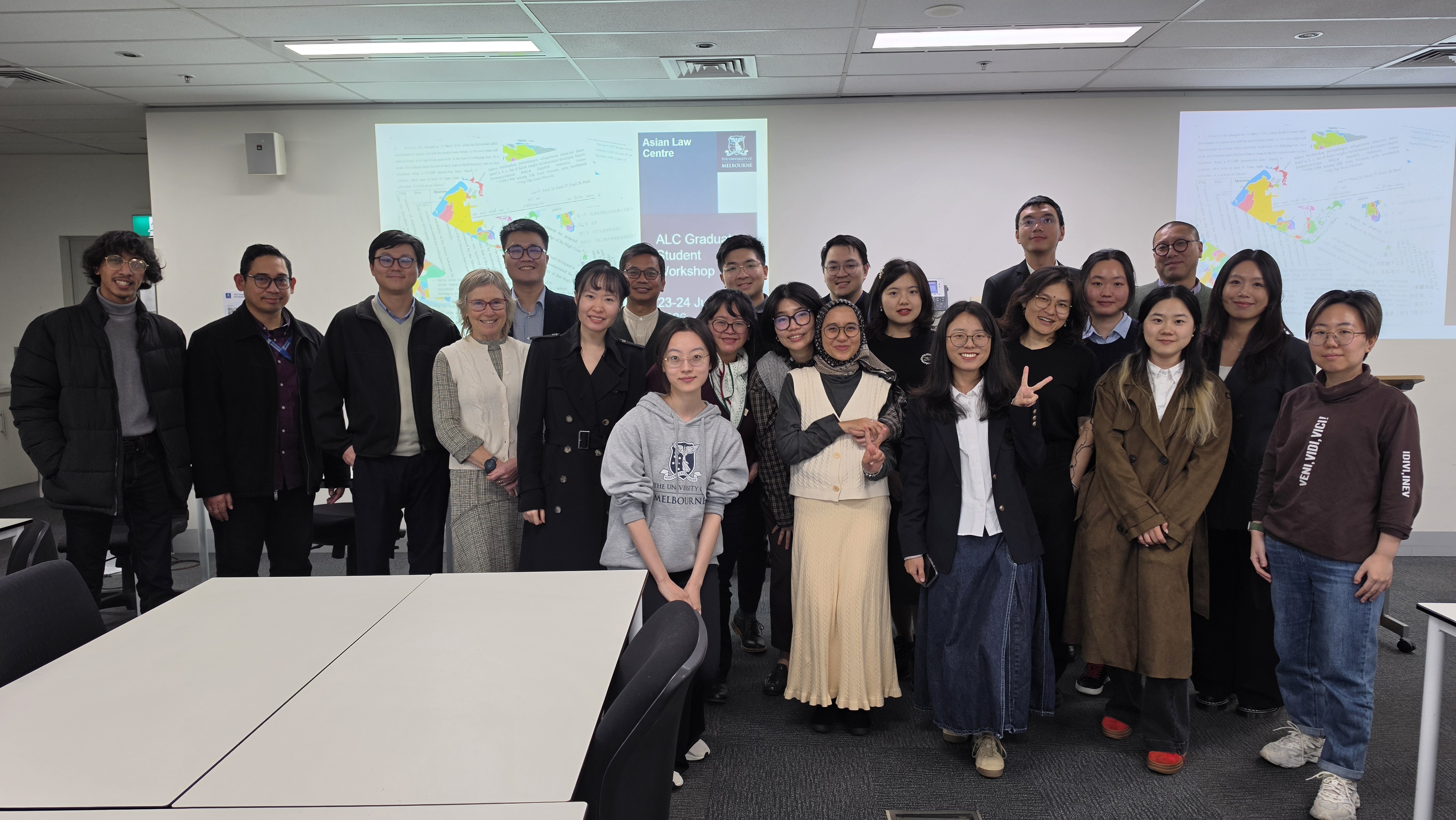
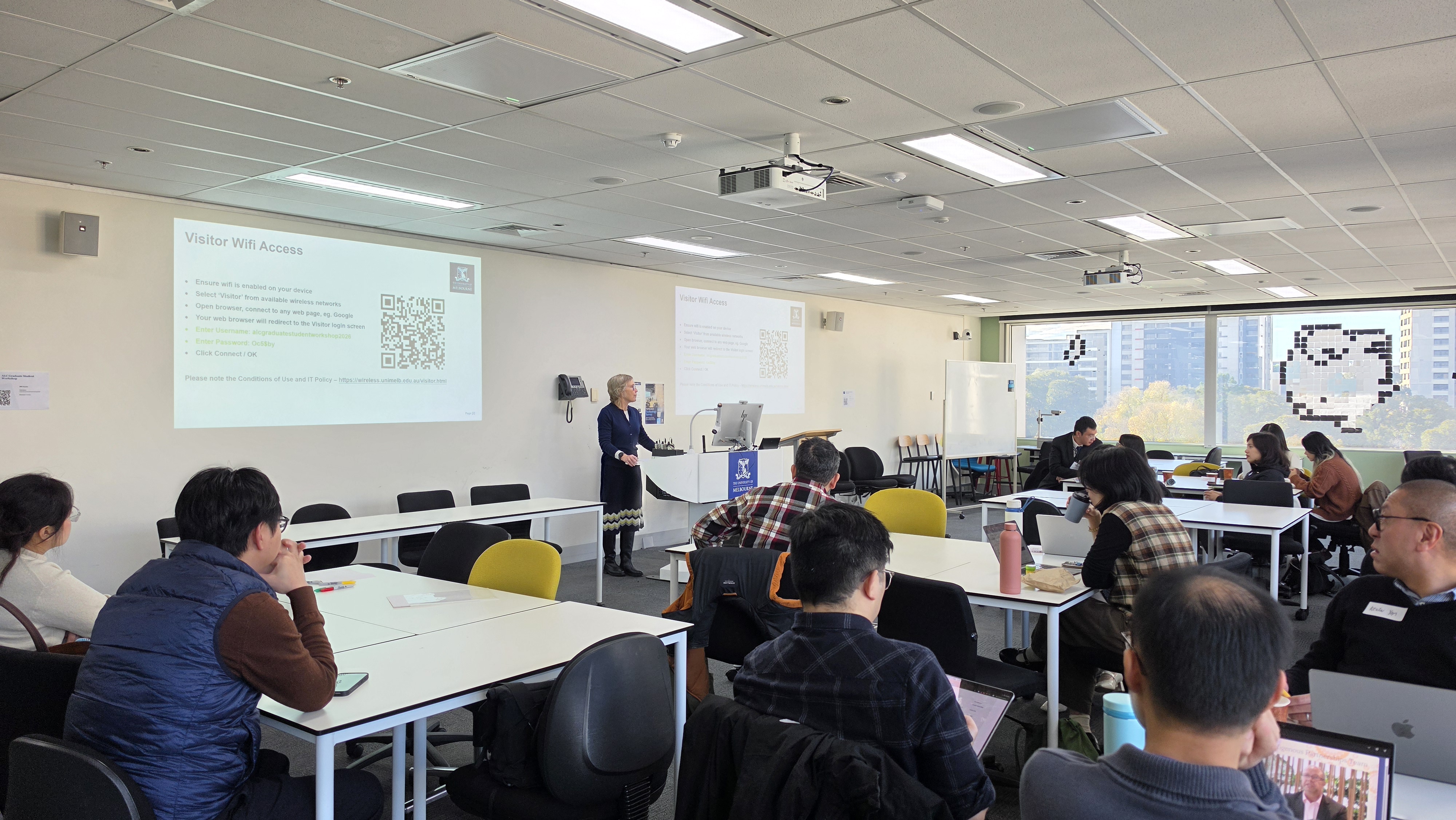
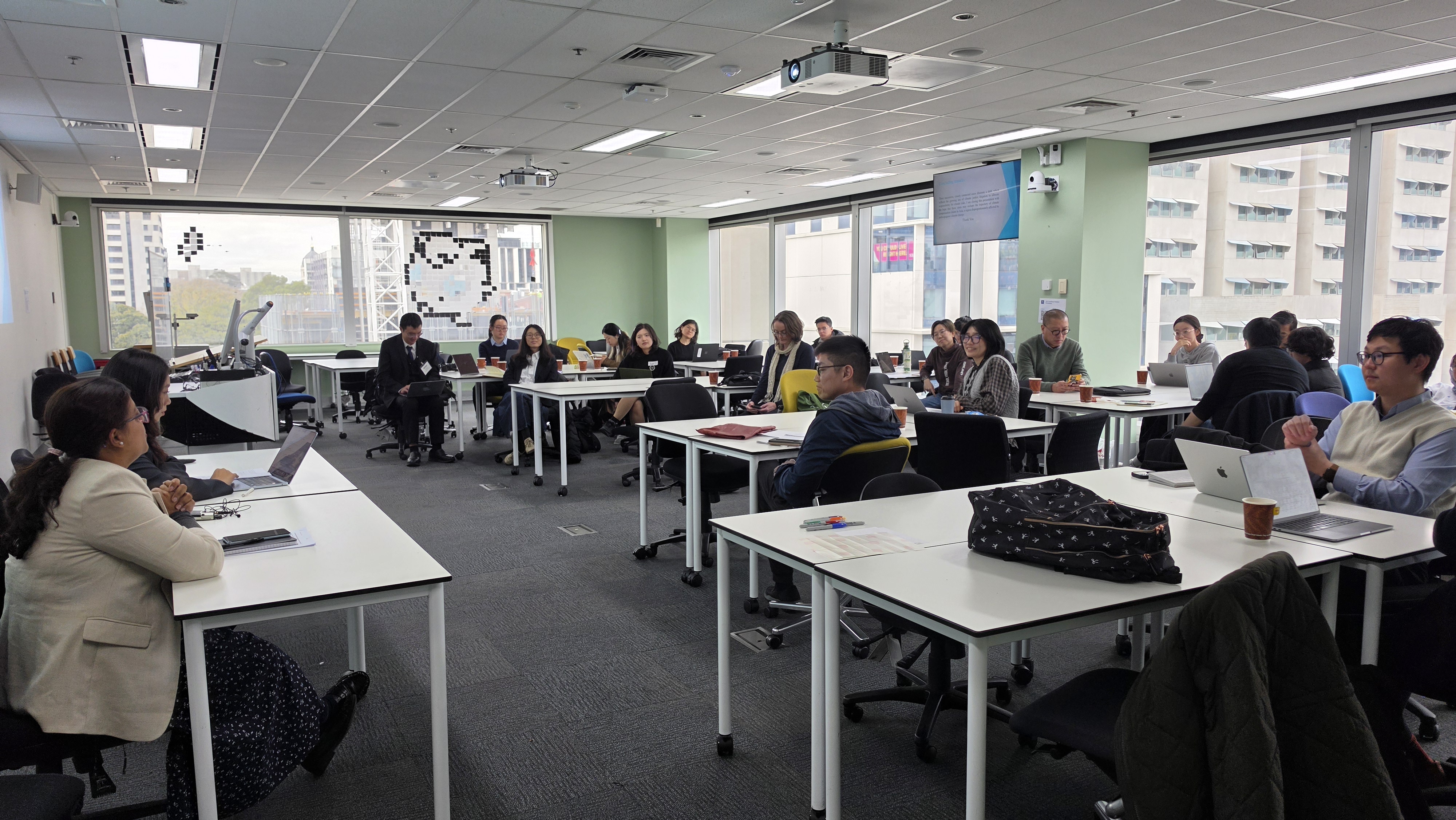
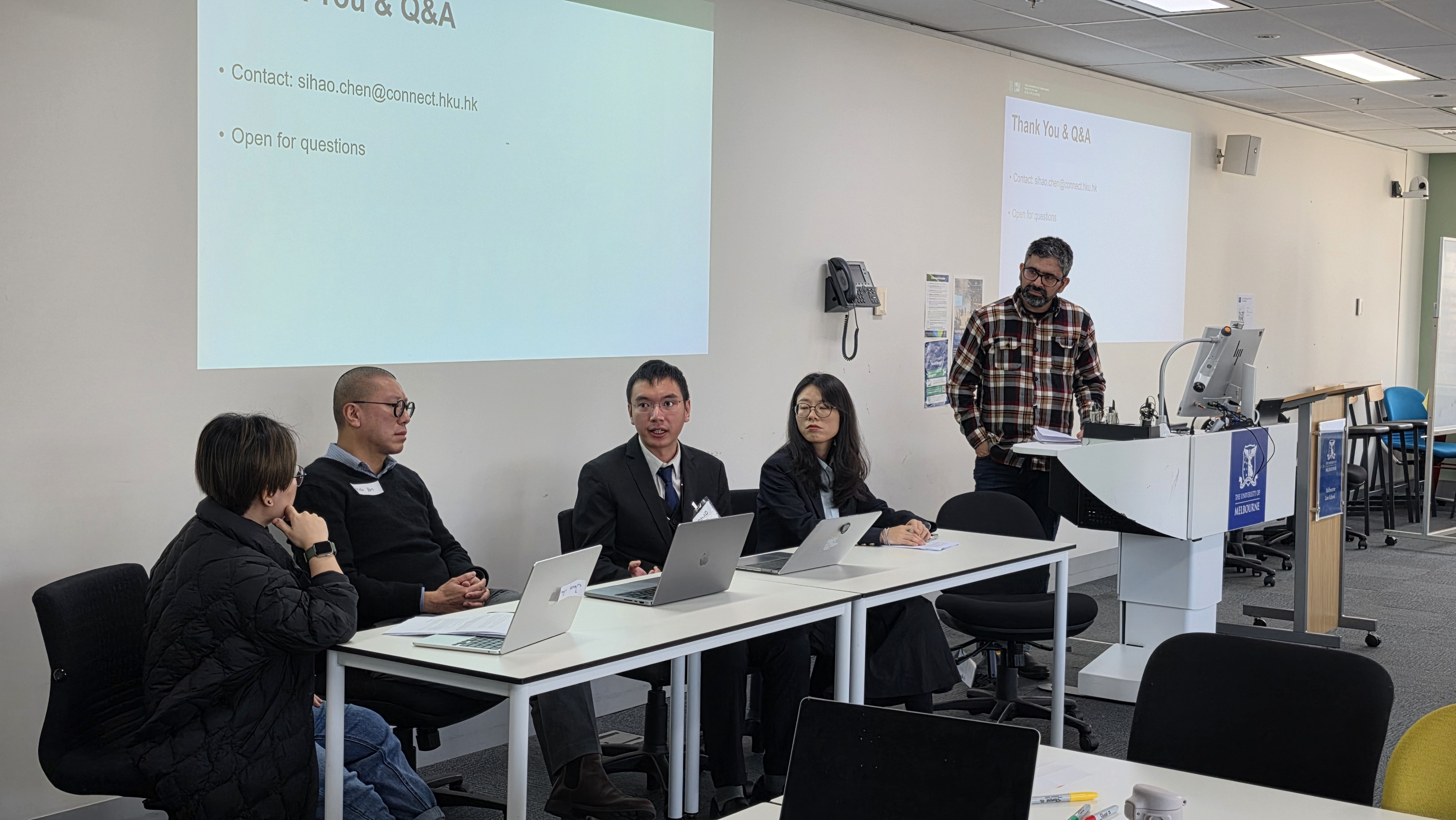
The breadth of research demonstrated both the diversity of contemporary Asian legal scholarship and the common questions that increasingly unite it. Across jurisdictions, participants examined how legal systems respond to challenges including climate change, artificial intelligence, digital transformation, shifting state-market relations, constitutional reform and the protection of fundamental rights.
Rather than viewing these developments in isolation, presenters consistently revealed the complex interactions between law, governance and society that characterise legal change throughout the region.
The programme featured six thematic panel sessions, each chaired by distinguished scholars whose expertise provided both intellectual leadership and constructive guidance.
- The opening panel, Rethinking the State and Economy, chaired by Dr Adil Hasan Khan, explored the evolving relationship between markets, state power and legal regulation. Presentations ranged from analyses of securities class actions and political mobilisation in China to comparative studies of wealth management regulation in Hong Kong and Singapore, historical examinations of trademark disputes, and contemporary assessments of China's emerging environmental, social and governance (ESG) disclosure framework.
- The second panel, Legal Changes and the New State–Market Nexus, chaired by Professor Andrew Godwin, turned attention towards corporate governance, regulatory innovation and institutional design. Presenters considered nominee shareholding in China, the policy-driven evolution of corporate law governing Vietnam's state-owned enterprises, the institutional architecture of tax administration for general artificial intelligence in China, and the place of inequality within Chinese anti-monopoly law.
- The third panel, Institutions and Changing Legal Landscape, was chaired by Dr Helen Pausacker. Research on Indonesia's data protection legislation examined the delicate negotiation between power, privacy and administrative procedure, while papers on Myanmar explored authoritarian transitional justice, illiberal constitutionalism and competing visions of federal democracy.
- The fourth panel, Negotiating Law and Pluralism, chaired by Associate Professor Amanda Whiting, explored the complex intersections between law, identity and legal pluralism. Presentations investigated the procedural erosion of married-out women's land rights in rural China, evolving understandings of privacy in Vietnam, and the international legal recognition of maritime identities and territorial relationships of sea nomad communities.
- The fifth panel, Navigating Changes through Case Law, chaired by Professor Jianlin Chen, demonstrated the enduring importance of judicial decisions in shaping legal development. Participants examined the unintended consequences of China's drink-driving legislation alongside emerging trends in corporate climate litigation across climate-vulnerable Asian jurisdictions.
- The sixth panel, Changing Paradigms in Everyday Justice, chaired by Professor Sarah Biddulph, shifted attention towards the lived experience of legal governance. Papers examined how anticipated repression influences anti-sexual harassment mobilisation within Chinese universities, the construction of legality and illegality in digital 'account recovery' videos, and the transformation of mediation into contemporary policing practices.
Following each panel, presenters participated in small-group mentoring sessions led by their respective chairs. These discussions formed one of the workshop's defining strengths. Rather than limiting engagement to formal questions from the audience, participants received thoughtful, detailed and highly constructive feedback from experienced scholars.
Complementing the panel sessions was a dedicated Roundtable Discussion, chaired by Earn Asanasak and Satrio Pratomo, which encouraged participants to step back from their individual research projects and reflect collectively on the broader significance of their scholarship. Discussions were notably lively and thoughtful, as participants exchanged perspectives drawn from diverse jurisdictions, methodological traditions and lived experiences.
By the conclusion of the session, a shared sense had emerged that rigorous scholarship not only documents legal transformation but also contributes to deeper conversations about justice, governance and institutional development across Asia.
Equally valuable were the many informal conversations that unfolded throughout the workshop, over shared meals, during networking sessions, and in the spaces between presentations. These moments reinforced the collaborative spirit that has become a defining characteristic of the ALC Graduate Student Workshop. New professional relationships were established, future collaborations began to take shape, and participants joined an expanding international network of scholars committed to advancing research on Asian law.