Statelessness and Climate Change
Millions of stateless people are denied a nationality and face considerable vulnerabilities in the context of climate change, including exclusion from disaster relief, healthcare and adaptation solutions.
Climate change is a risk multiplier for displacement. The risks of statelessness can increase when people move, including during displacement situations in the context of climate change and disasters.
Specific efforts are needed to reduce statelessness risks for displaced people and to include stateless persons in climate action to strengthen their protection and resilience.
Statelessness risks during displacement
In 2020, hazardous weather events led to more than 30 million displacements, with most displaced persons remaining within their home countries.
While such displacement can be either internal or cross border, in both scenarios a risk of statelessness may arise for a number of reasons.
Statelessness may result in situations where individuals are unable to prove their nationality due to loss of documentation, or the inability to obtain replacement documentation due to challenges accessing consular services.
Protracted or permanent displacement outside of one’s country can sometimes result in passive loss of citizenship.
The children of people living in displacement may be at risk of statelessness either because of issues of proof of entitlement to nationality (e.g., challenges accessing birth registration and nationality documentation) or issues relating to entitlement to nationality (where nationality laws are not consistent with the standards that prevent and reduce statelessness), or both.
Impacts of climate change on stateless people
People who are already stateless face specific and heightened risks because of pre-existing vulnerabilities and potential exclusion from protective measures.
Stateless people may be excluded from critical support services, including disaster relief and emergency healthcare, that are only available to those who are citizens or who have a recognized legal status.
Many stateless people work in the informal economy and may face loss of livelihoods resulting from weather-related catastrophes. In such cases, a stateless person may be excluded from access to social services.
Stateless people are also typically excluded from State surveys and censuses and thus may be left out of climate change adaptation plans, national development plans, national energy strategies and disaster risk reduction plans and policies.
Individually or all together, these risks leave stateless people more exposed to climate risks, while having little access to support or protection.
Sea-level rise
To date, the literature on climate change and statelessness has largely focused on potential statelessness arising as a result of sea-level rise and the possible ‘disappearance’ of small-island States. Most experts, however, have concluded that the “sinking island” scenario will not inevitably leave island inhabitants stateless. Small-island States have also taken adaptive measures and adopted legal solutions in a preventative manner that have been shown to mitigate both displacement and statelessness risks. Therefore, the greatest risks of statelessness due to climate change relate not to disappearance of States as such, but rather to the significant numbers of people being displaced in the context of climate change and disasters all over the world.
Chapter 5 in Jane McAdam Climate Change, Forced Migration and International Law, OUP 2012; Chapter 6 in Lilian Yamamoto and Miguel Esteban Atoll Island States and International Law: Climate Change Displacement and Sovereignty, Springer Heidelberg New York Dordrecht London 2014; and Walter Kälin, Conceptualising Climate-Induced Displacement in Jane McAdam (ed), Climate Change and Displacement: Multidisciplinary Perspectives, Hart Publishing 2010
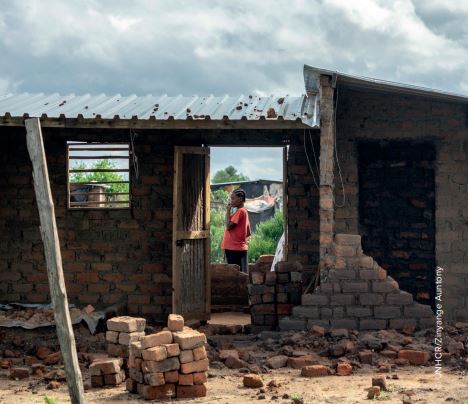
Spotlight: UNHCR response to statelessness risk following Cyclone Idai
In the aftermath of Cyclone Idai in 2019, people in the Chimanimani and Chipinge districts of the Manicaland province of Zimbabwe faced the risk of statelessness due to the loss of documentation as a result of the cyclone. To address this risk, UNHCR, in collaboration with the Government of Zimbabwe, organized mobile civil documentation services that issued 65,000 documents to people affected by the cyclone, including birth certificates and national identity cards.
Good practices
The following good practices can help States to address the effects of climate change on stateless populations, and help prevent new cases of statelessness from arising
- Resolve existing situations of statelessness, to avoid the risk of stateless people being excluded from measures, plans and policies designed to mitigate, respond to, and adapt to the impacts of climate change.
- Follow the guidance contained in the Global Action Plan to End Statelessness, in particular Action 2 – ensure that no child is born stateless, Action 3 – remove gender discrimination from nationality laws, Action 6 – grant protection status to stateless migrants and facilitate their naturalization, Action 7 – ensure birth registration for the prevention of statelessness, and Action 9 – accede to the UN Statelessness Conventions.
- Increase compliance with safeguards under international human rights instruments that protect the right to a nationality, including the 1961 Convention on the Reduction of Statelessness, the 1965 Convention on the Elimination of All Forms of Racial Discrimination, the 1966 International Covenant on Civil and Political Rights, the 1979 Convention on the Elimination of Discrimination Against Women, the 1989 Convention on the Rights of the Child, and the 2006 Convention on the Rights of Persons with Disabilities.
- Incorporate information about the risks of statelessness and practical steps to prevent and reduce statelessness in all planning documents, policy guidelines and information campaigns on climate change, disasters, and displacement.
- Engage in bilateral and regional arrangements aimed at preventing statelessness in the event of cross-border displacement in the context of climate change through guarantees of dual nationality, waiving formal requirements for renunciation of nationality, and ensuring basic rights and benefits in host countries.
- Ensure that stateless people are included in practical measures, plans and policies designed to mitigate, respond, and adapt to the impacts of climate change, including access to basic rights and disaster relief.
This factsheet was prepared by UNHCR in partnership with the Norwegian Refugee Council and the Peter McMullin Centre on Statelessness.