Past courses and student experience
The Statelessness Intensive Course is one of the major initiatives of the Peter McMullin Centre on Statelessness. Following consistent feedback from professionals working on statelessness globally, the course is a response to the pressing need for formal training that connects people across countries, sectors and fields. For the past eight years, the Statelessness Intensive Course has been held every February with outstanding success.
"The course allowed me to learn about the issue of statelessness globally and gave me an opportunity to connect with others in the same or similar fields of work. I'd often felt like I was working in a vacuum where it seemed like no one else knew of or worked on statelessness. But being in the virtual classroom space fostered international connections and friendships that have persisted beyond the course." Hiba Thobani, Imkaan Welfare Organisation, Pakistan - 2023
"Although I come from a non-law background, I found the course very well-pitched and informative from a wide range of perspectives. We learnt about many different contexts that were unfamiliar to me – and I was constantly impressed by the calibre of teachers who gave their time to share their knowledge." Cassie Cohen, Department of Foreign Affairs and Trade, Australia - 2020
In 2019 and 2020, the course was held in person at Melbourne Law School, with registrants traveling to Melbourne to participate over the 5-day program. Since 2021 all classes have been held online, making sure that the course is accessible to people from all over the world, including those with lived experience of statelessness (many of whom might not be able to travel).
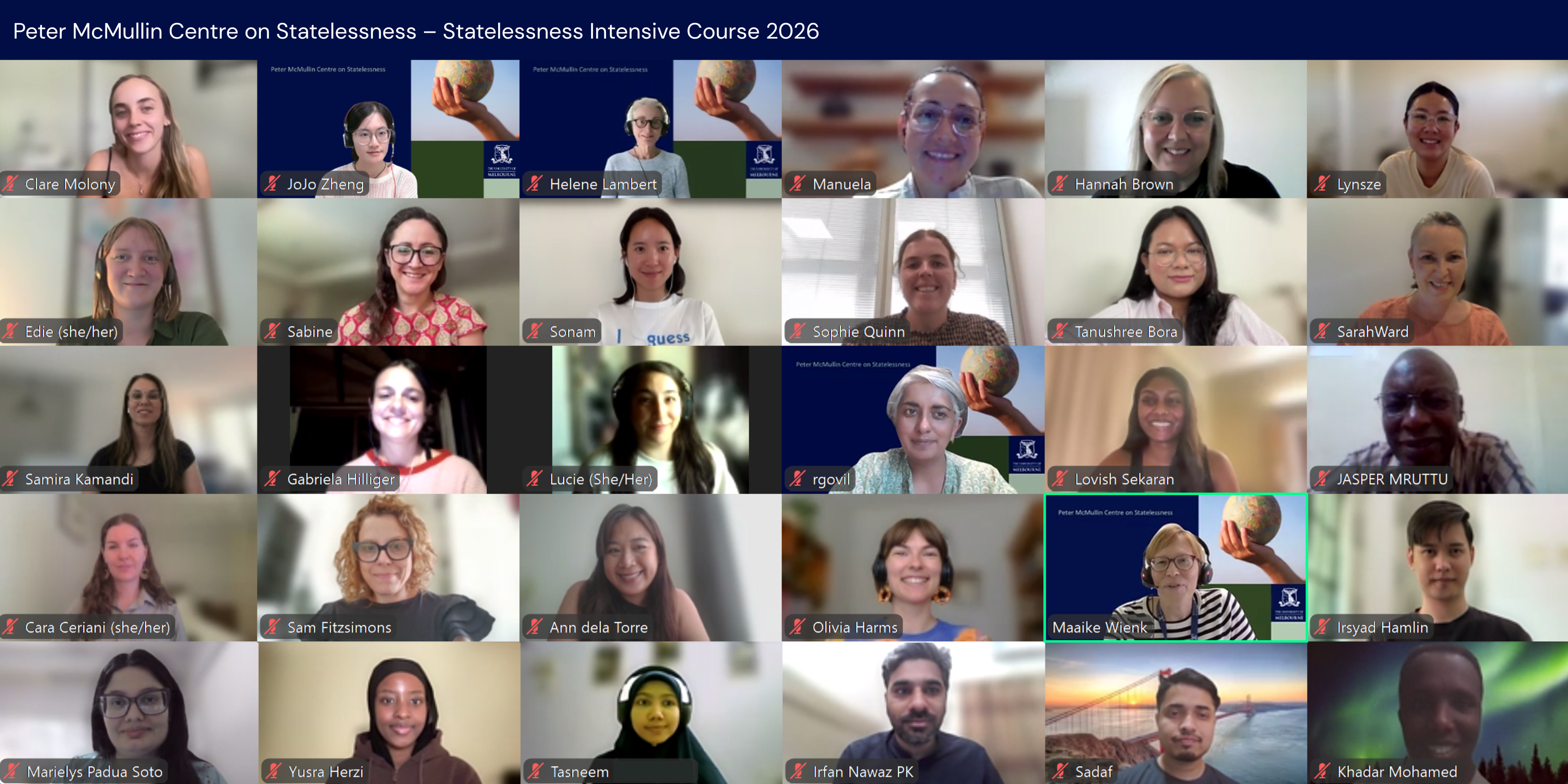
The interdisciplinary 5-day program includes lectures and interactive sessions, providing participants with up to date knowledge of:
- The international legal framework around statelessness
- Causes and impact of statelessness
- Statelessness in different regions and different contexts
- Addressing statelessness and effecting change
"The course strikes a rare balance between solid legal grounding and a deeply reflective, decolonial approach to understanding statelessness. Rather than treating it as an abstract legal issue, it consistently centres voices and experiences from the Global South, making the learning feel real, urgent and grounded." Irsyad Bin Hamilin, Human Rights Commission of Malaysia (SUHAKAM) - 2026
"Involving practical and theoretical lectures and exercises, and diverse participants (including those with a lived experience of statelessness), the course provided an excellent grounding in topical and legal issues across a vast range of topics of interest to lawyers, decision-makers, civil society actors, and those in the field." Nathan Stormont, Administrative Appeals Tribunal, Australia - 2022
"I also liked learning about the interventions taking place through international treaties, regional, national and local approaches. Since I work directly on issues of statelessness in my country, these pieces of knowledge and the access to related documents I got from the course are fundamental for me to have more contribution to addressing the issues in my work." Rattanak Ly, Women Peace Makers, Cambodia - 2022
The annual course cohorts are strictly capped to guarantee a quality student experience. To date, 276 people based in 47 countries on every continent have completed the course, with the majority based all around Asia.
The intensive course attracts a wide range of participants, including representatives of government, international organisations, non-governmental organisations, lawyers, advocates, decision-makers (including refugee decision-makers), scholars and students.
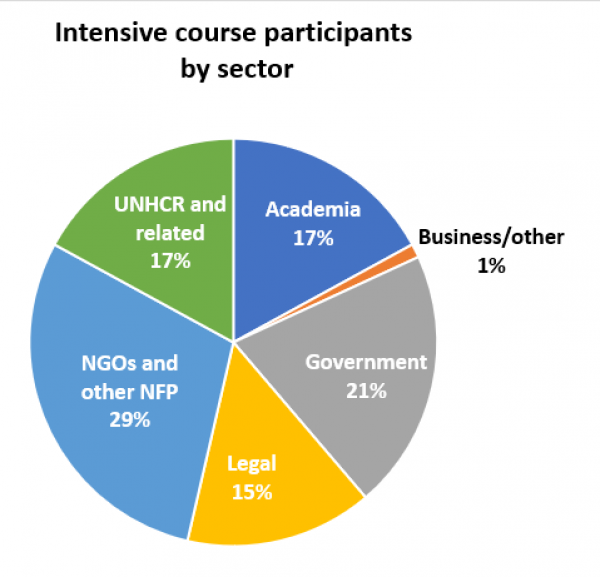
Alumni are highly satisfied with the course, with more than 90% of respondents to the 2026 feedback survey indicating that the course exceeded their expectations. The course has received extensive endorsement and support from UNHCR, which has generously provided scholarships to fund selected participants in the period 2021-2025.
"The Peter McMullin Centre on Statelessness Intensive Course provided an invaluable deep dive into the legal, social, and humanitarian dimensions of statelessness, equipping me with practical strategies to address this issue in my work around route-based approaches to mixed movement. The course’s expert-led sessions, real-world case studies, and engagement with global practitioners strengthened my ability to advocate for stateless persons’ rights and implement effective protection mechanisms. I highly recommend this course to professionals working in refugee protection, human rights, and nationality law, as it offers critical insights and tools to combat statelessness globally.” Unyime Obioma, UNHCR, Nigeria - 2025