This research project on ‘The Blue Economy and International Law’ is funded by the Australian Research Council’s Future Fellowship grant scheme (ARC FF220100418).
The aim of this project is to identify the role and contribution of international law to the ‘Blue Economy’.
The Blue Economy seeks to harness the economic potential of the oceans in a manner consistent with long-term sustainability and human welfare. Opportunities are underpinned by legal relations established by the United Nations Convention on the Law of the Sea (UNCLOS) and other treaties and legal instruments, yet little is known about the role of international law in the Blue Economy.
This project is led by Professor Margaret Young, ARC Future Fellow, Professor at Melbourne Law School and Director of the Institute for International Law and the Humanities. Dr Dan Parker and Rohan Nanthakumar are Research Associates.
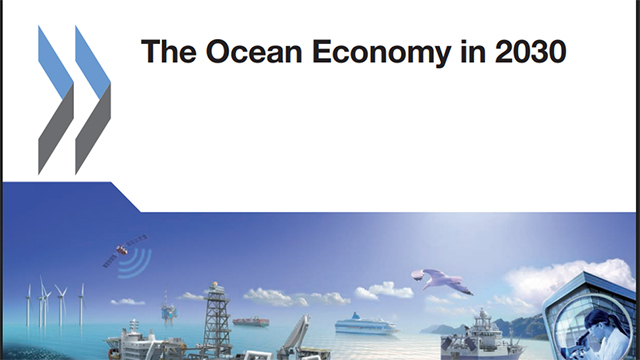
The project’s impetus is the dramatic rise in Blue Economy policies of states, regional organizations and international funding institutions. The contribution of the oceans to the global economy has been projected to double from US $1.5 trillion in 2010 to at least US $3 trillion by 2030 (OECD, 2016: 13). The Blue Economy leads to the decarbonisation and improvement of traditional sectors, such as fisheries, shipping and transportation, while supporting emerging sectors relating to eco-tourism, offshore energy and large scale marine protected areas. States’ exclusive economic zones (EEZs), areas beyond national jurisdiction, and various freedoms and duties are ever-present in the Blue Economy. Yet there are major gaps in knowledge and understanding about international law’s coherence and capacity to safeguard environmental and social values. Law’s role in constructing relations of property and production in the Blue Economy also demand articulation.
This project investigates how international law shapes the dependence of humans on the ocean in the context of increasing economic demands, human welfare needs, and drastically mounting ecological harms. It draws on a range of methods including doctrinal analyses of legal texts, judgments and policies, empirical studies of practical examples, visual mapping of relevant treaties, and interviews with experts.
Learn more about this research through links to seminars, podcasts, publications, and other resources below.